
Most in my generation would agree that General K S Thimayya, DSO, (1906-1965) was one of the finest Generals to command the Indian Army. “Timmy” as he was popularly known as was the Chief of Army Staff from 1957 to 1961. As a keen student of military history, I was delighted to recently visit the Museum set up in his memory. This is in his ancestral home, “Sunnyside” in Madikeri, Kodagu his hometown.
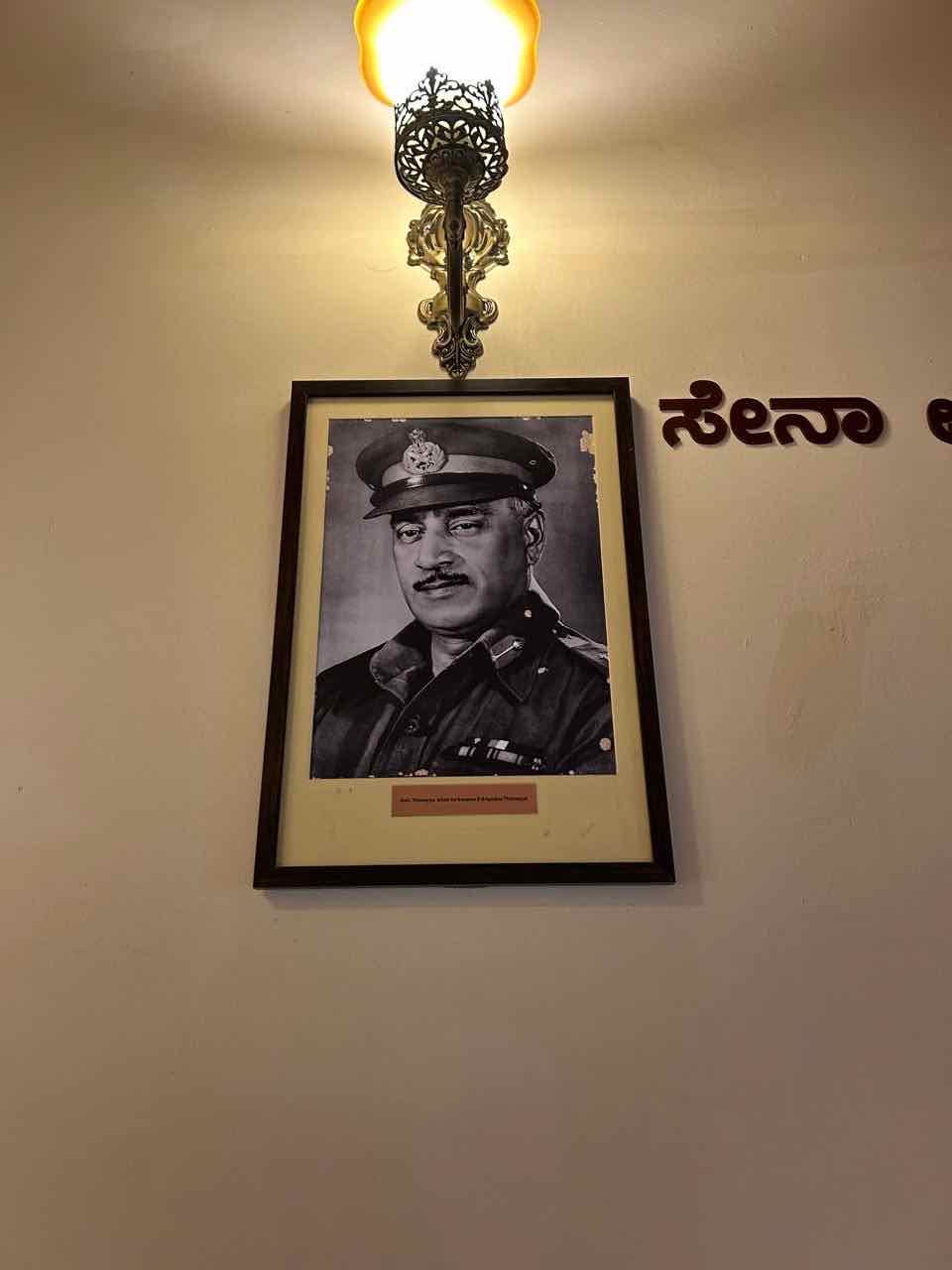
This Museum is truly a labour of love. Those responsible must be commended for the pains taken to establish such an informative and interesting place. A fitting tribute to a great son of India. It was inaugurated by the then President of India, His Excellency Ram Nath Kovind in February 2021. The museum traces Thimayya’s life from his early childhood till his death. This is especially useful for the younger generations who may not know much about Gen Thimayya. The General passed away in 1965 while commanding the United Nations Peace Keeping Force in Cyprus.
He had an illustrious career of 35 years in the Indian Army. He was a product of the Prince of Wales Royal Indian Military College, Dehradun and the Royal Military College, Sandhurst. Commissioned in the then British Indian Army in 1926 he first served in the Highland Light Infantry as was the practice at that time. Indian officers were first attached to a British regiment before moving to an Indian regiment. His was the 19th Hyderabad Regiment which later became the Kumaon Regiment. This famous Regiment has given us three Chiefs of Army Staff and two posthumous winners of the Param Vir Chakra. Thimayya was awarded the prestigious Distinguished Service Cross (DSO) by the British during the Burma campaign.
In his exceptional career, he became the first Indian to command a brigade in the days of the British Raj. He became famous for his professional work during the 1948 Kashmir War with Pakistan. Thanks to his remarkable personality he handled two difficult assignments for the United Nations in Korea and in Cyprus.
His years as the Chief of Army Staff were unfortunately not as satisfying as he would have wished. The Prime Minister, Jawaharlal Nehru and Defence Minister Krishna Menon were seemingly jealous of his popularity. In those days military coups were quite common in Asia. They may have feared that in India too the military would carry out a coup.
Thimayya’s conduct based on his principles created more problems for him. First was the incident when he stood up to Nehru and the powerful Chief Minister of the Punjab, Pratap Singh Kairon to defend the honour of a woman. After a series of other disagreements with the Defence Minister in 1959, General Thimayya handed in his resignation. Prime Minister Nehru persuaded him to not publicise his resignation to which Thimayya agreed as a gentleman. Much to his chagrin Nehru went ahead and spoke about it in the Lok Sabha.
Many say that General Thimayya was not as effective after this unsavoury incident. His recommendations were not accepted and he lost his influence. After he retired from the Army, India – under the same leadership of Nehru and Menon- was thrashed by the Chinese in 1962. This article in the Hindustan Times has more details.
India’s loss was the United Nations gain. Post his retirement , he was requested by the United Nations Secretary General to head the United Nations Peace Keeping Force in Cyprus.
The museum is well maintained and a fitting tribute to one of India’s greatest soldiers. The moving tributes in the visitor’s book show how highly General Thimmaya is still regarded- 59 years after his death. When you are next in this beautiful part of India, please pay homage to General Thimayya by visiting this museum in Kodagu.
 Prem Rao : Stories from a Story Teller