Good Bye To Flying Non-Stop From BLR-SFO

A news item in LiveMint a few days ago grabbed my attention. Effective March 1, 2026, Air India’s flight AI 175 which took you non- stop from Bengaluru’s Kempegowda International Airport to San Francisco would no longer be in operation.  Figures indicate that in the last year nearly 1,50,000 used these non-stop flights. This was a popular flight for techies and business executives as it connected two major tech hubs. It also was popular for old folk like me, as it helped us skip a layover to catch a connecting flight.

Before this non-stop flight came into being, we used to travel via Europe. I remember the stopovers at London’s Heathrow airport, or at the Charles de Gaulle at Paris, or the Schiphol at Amsterdam. The break was handy in the old days – we could go out and stretch our legs. Later however, particularly after Covid, things changed dramatically. The security processes made us go through numerous checks all over again. Often it meant moving from one terminal to another- in Heathrow, for example, this involved a short train trip as well.

With these changed circumstances, Air India’s non-stop flight came as a big boon, especially for older folk. I recall reading with awe back in January 2021, that an Air India non-stop flight from San Francisco to Bengaluru was flown by an all women team of pilots. who created history by flying over the North Pole. This feat was indeed rare for those days.

Living in more affluent times than we did in our childhood, it is not surprising to see many of the 35 seats in the business class occupied by Indian elders flying out to be with their children! It has been our pleasure to have flown this several times- to and from San Francisco. I would like to give a shout out to the cabin crew of Air India. In our experience, they were always polite and efficient. Many went the extra mile to make us comfortable. On many occasions, the cabin crew helped us  set up and retract the flat bed.

Another aspect of flying with Air India which we enjoyed so much was the food. This suited us more than that of other airlines. All that was served was invariably of a high standard, served with impeccable style. The entertainment channels on offer helped us pass time by seeing movies during the long flight of  nearly 17 hours from Bengaluru to San Francisco. After all, the cities were 8400 miles or 14,000 kilometres apart.

Air India had cited operational reasons for discontinuing the BLR-SFO non-stop. Even their long range B777- 200 LR aircraft could not fly the new routes without re-fuelling.  Not flying over Pakistan and Ukraine were the main reasons for the longer routes. It is reported that over time Air India will move its hub for flights to the US to Delhi. After March 1, 2026 we will need to find other options to reach our destination. Based on our personal experience over the years, I for one, will definitely miss the AI 175 and AI 176 non-stop flights.

I hope someday they will be reintroduced. The sooner the better.

In Homage: ASI Shri Tukaram Omble, Ashok Chakra (Posthumous).

A few days ago, on November 26, my mind compulsively went back to the dreadful events that engulfed Mumbai – India’s commercial capital- on that day 17 years ago! As you would know, starting November 26, 2008 the city was in the grip of panic amidst concerted planned attacks by a group of Lashkar -e- Taiba terrorists from Pakistan.

In my blog post of November 27, 2020, I had recalled the tragic chain of events that took place after the terrorists landed in Mumbai in the evening of November 26, 2008.

Another 5 years have gone by since then. We remember with sorrow 166 innocents of different nationalities, mostly Indian who were killed and more than 500 who were severely injured. These didn’t take place in one place. The battle with the terrorists went on till November 29. It was centred in different locations like the Taj Palace, The Oberoi, Chabad House, Cama and Albless Hospital, Chhatrapati Shivaji Maharaj Terminus of the Indian railways, the road leading to Girgaum Chowpatty etc.

There were many heroes in those chilling days. Many were nameless: taxi drivers who rushed injured to hospitals; Mumbaikars who sheltered passers by during the shootings on the roads; the constabulary of the Mumbai Police who were facing an enemy the likes of which they had never face before- in terms of quality of equipment or the indoctrinated ferocity of their attacks; the staff of the Taj and Oberoi Hotels who put this lives at risk to save their guests; and of course, the Naval commandos (the MARCOS) and the National Security Guard NSG who were better equipped to fight the terrorists.

Some were named too: like Vishnu Zende , the train announcer at CST whose timely announcements led thousands of people in the vast station to safety;

In my opinion, by far the bravest deed came from 54 year old Asst Sub Inspector Tukaram Omble of the Mumbai Police. He had joined the Mumbai Police in 1991 after serving in the Signals Regiment of the Indian Army. It was Omble’s sheer bravery that enabled Ajmal Kasab – one of the terrorists- to be captured alive. Kasab was armed with the dreaded AK 47. Despite this, Omble physically hung on to Kasab though he took many bullets in his chest He clung on till his colleagues overpowered Kasab. Omble was awarded a richly deserved Ashok Chakra posthumously.

We came to know later that the terrorists ( all from Pakistan) came wearing “kalavas” traditionally worn by Hindus and had IDs with Hindu names to confuse the police. There was also a bizarre claim by a few that the Rashtriya Swayamsevak Sangh (RSS) was behind the terror attack. The book ” 26/11: RSS Ki Sazish” was launched by veteran Congress leader Digvijay Singh.

Thanks to Omble’s bravery Kasab was captured alive. This ultimately led us to the truth behind the dastardly attacks.

Years have flown past, but we remember Omble with awe and respect. We can never forget what he singe-handedly did in the early hours of November 27, 2008.

From IT to Music: Sunil Koshy’s Inspiring Journey

It takes a lot of courage to leave a well-paying job in India’s much vaunted Information technology (IT) sector and strike out on your own. More so when your passion is not even remotely connected with the core work you do for a living. Sunil Koshy was working for Intel when he found the urge to follow his passion for music too strong to resist. Overcoming the inevitable initial hesitation, he decided to take the plunge, as it were.

He zoned in on an interesting idea. Millions of us, the world over, sing in the comfort and privacy of our bathrooms. However, we are too shy or scared to sing in front of others leave alone a sizeable audience of strangers. His start up, enticingly christened” From Mug To Mike” (or FMTM for short) sought to teach such people to break out of their comfort zones and muster the courage to sing- for their friends and family, if not for total strangers.

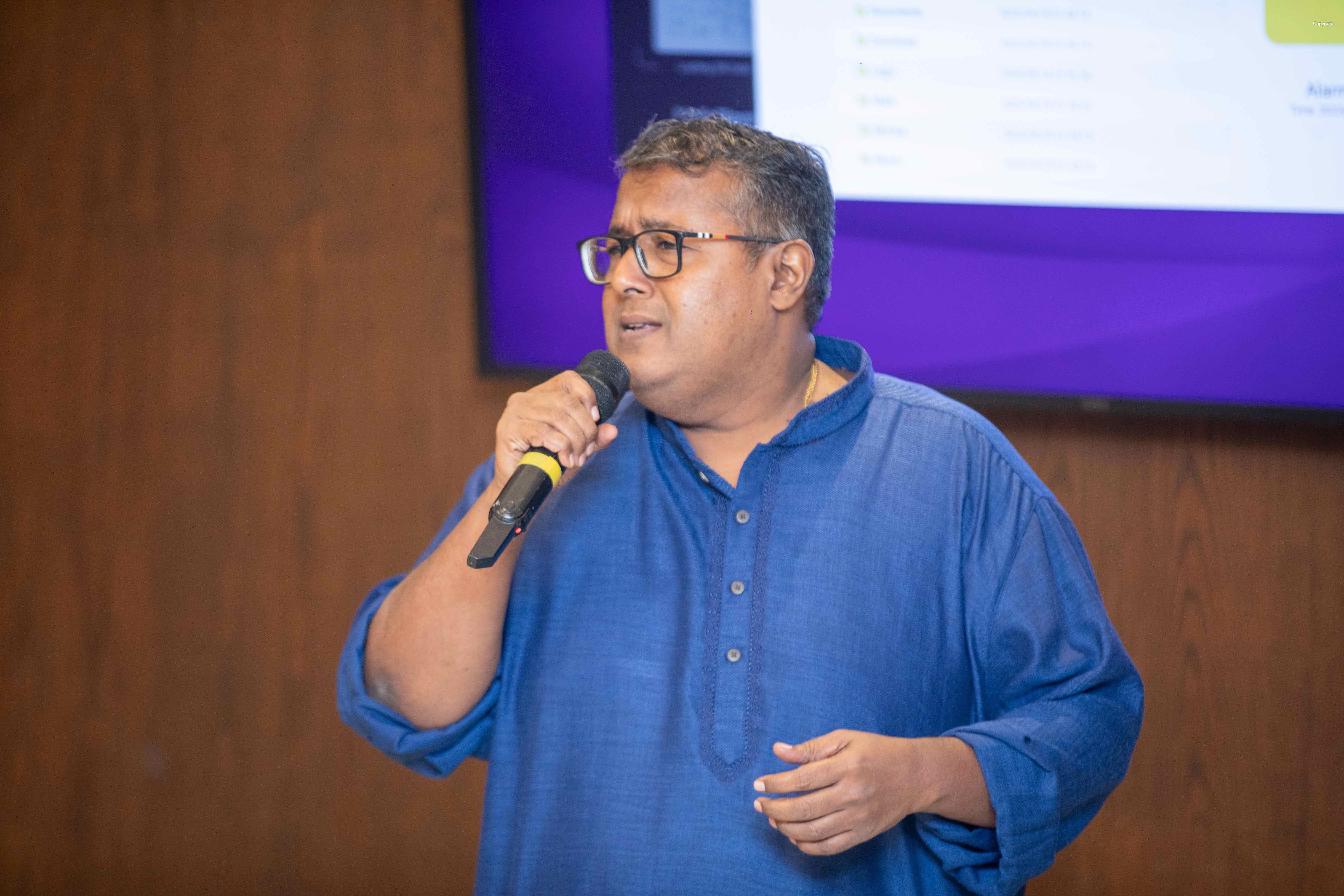
Over the years, FMTM has grown from strength to strength as has Sunil’s versatility. He is a music composer, director, vocal coach, singer- and a successful entrepreneur. In this, standing shoulder to shoulder with him is his wife and biggest supporter : Co- Founder: Archana Hallikeri.

They have developed different types of workshops of varying duration. These help people pursue a hobby, that is often relegated to the back burner out of fear, namely singing. You can catch glimpses of their work in their Instagram account.

I have had the pleasure of knowing Sunil for the past few years. More than my describing him, you may like to hear him tell his own story! By happy co-incidence, I came across this interesting podcast which Vanitha of Changepreneurs did on Sunil’s birthday, August 2. Happy listening!

My take aways from Sunil’s story: 1. It calls for a certain amount of courage to buck the trend and venture into unchartered territories. 2. Following your passion is not just a catch word or a fad. A lot of hard work and perseverance is required to make a success of your endeavour. 3. When you succeed, the satisfaction you get is unmeasurable.

I am sure Sunil will agree! He has set a high benchmark not only for himself but for other young people who may be motivated to emulate him. It augurs well for the future of our country when we have role models like Sunil Koshy!

Remembering The Emergency

On June 25, 2025, some five weeks ago, I don’t know how many of you remembered June 25, 1975 – the day the infamous Emergency was declared in India 50 years ago! All of us old enough to do so remembered the Declaration of Emergency by Prime Minister Indira Gandhi’s Congress Government on that day. More than the declaration day itself, we still vividly remember the horrors perpetrated during the Emergency which ran from June 25, 1975 to March 21, 1977.

For those who have no idea what went on all those decades ago, this Factsheet released by the Press Information Bureau throws considerable light on those dark days. All of us were affected, some more than others. Some of us were lucky to come away unscathed. A few images still haunt me after all these years. The first is of George Fernandes shackled like a criminal. The second is of actress Snehalatha Reddy who died a mere 5 days after her release from prison. The third is men being forced to undergo sterilisation.

While there were many acts that went against the principles of a free democracy, the sterilisation campaign was by far the most heinous. At that time, I worked for a cement company in a remote part of the country. One day the Headmaster of the School our Company ran for the benefit of the employees’ children was considerable agitated. He said he had received orders – verbal of course- from the relevant Government authorities to marshal all the male staff of the school to a public hospital. The reason for this was clear. They were to be sterilised as that Officer had a target to achieve! Luckily, this was not a Government run School though it was recognised by the Government. It received no funds from the Government. This and the firm diplomatic nudge by our senior management enabled the Headmaster and his staff escape a fate -inevitable for the less fortunate.

I laugh to myself when I read reports in the newspapers in which opposition leaders accuse the current Prime Minister Narendra Modi of being fascist! Fascists like Adolf Hitler carried out over 4,000,000 sterilisations during 12 years of Nazi rule. In our 1975-77 Emergency, 1.07 crore sterilisations took place. Written as numerals that is: 10,700,000.

Man Made Tragedy at KSCA Chinnaswamy Stadium, Bengaluru

As a huge fan of the Royal Challengers Bengaluru (RCB) I was thrilled when we finally won the Indian Premier League (IPL) on June 3, 2025 after a wait of 18 long years! Like me, millions of fans celebrated- some long into the night and upto the early hours of June 4. It was a momentous victory coming after so many heart breaks. Remember, we had reached the finals on 3 previous occasions( 2009, 2011, and 2016) but failed to cross the line.

Naturally there was an explosion of emotion which was only to be expected. We were told there would be a grand victory parade and crowds in their thousands flocked to the Chinnaswamy Stadium hoping to see the function. Rumours/announcements of free tickets ( even if on a limited basis) added to the crowd frenzy. There was an unprecedented function on the steps of the majestic Vidhan Sudha. Even when the State team of Karnataka won the Ranji Trophy such an honour was not bestowed on the team. We watched the Chief Minister, Dy Chief Minister, and many Government big wigs with their families bask in reflected glory as the RCB players were honoured. The general public were kept far away. Yet they reached there in their thousands based on public invitations given by the CM no less. People perched precariously on lamp posts, tree tops, and even the roof of the High Court nearby. Thankfully, no one was injured.

Sadly, bad news was to follow. Near the KSCA’s Chinnaswamy Stadium there was total chaos. Survivors have described how they were not walking but carried away in the waves of frenzied fans. In the man made tragedy, 11 precious lives were lost. All were young persons. aged less than 30. They had come to celebrate but died without even catching a fleeting glimpse of the RCB players.

The print and visual media have given graphic and gory details so it not for me to repeat all that happened. The question is who is accountable? Who authorised the function in front of the Vidhana Soudha despite the warnings of senior police officials? Who was in a hurry to have the functions on June 4, when the police force were barely recovering from harrowing night of June 3 when Bengaluru celebrated RCB’s victory? Who made the announcement of free passes and the day’s program early on June 4 morning? Who decided that there would be two and not one function that day- adding to the stress of the limited police force? Who allowed the KSCA stadium to have far more people than the capacity warranted? These, and many other questions need to be answered.

The Chief Minister said he was invited by KSCA to the function so he attended. The Dy CM was present in the Chinnaswamy and pictures of him holding the trophy were splashed everywhere. The police say they did not give permission. The Police Commissioner- no less- has been suspended along with a few other senior police officers. The Secretary of the KSCA, Mr A Shankar,( an eminent CA, known to be extremely influential and powerful figure in Karnataka) and the Treasurer, Mr E S Jairam, have submitted their resignations accepting moral responsibility although they claim their roles were very limited. Nikhil Sosale, Head of Marketing for RCB, seen more prominently than even RCB skipper Rajat Patidar in the Vidhana Soudha function, has been arrested. Whether he was fleeing or not, can’t be said, but he was arrested in KIA Airport.

The State CID has been tasked to investigate the case. The High Court of Karnataka has suo moto taken up this matter for hearing on June 10. Compensation for the 11 victims was initially announced as Rs 10 Lakhs by the State Government but has now been increased to Rs 25 Lakhs.

I fear with the passage of time this story will get buried like every other. Fans need to get real. They should understand the real dangers of in being in the midst of mobs. The politicians are thick skinned. They aren’t going to lose sleep over 11 deaths- that too of people who were not celebrities. These deaths will not hurt them politically. If at all, perhaps M/s Shankar, Jairam and Raghuram Bhat ( former Karnataka and India left arm spinner and President of the KSCA) may be haunted by the last plaintive cries of innocent victims who lost contact with their loved ones and were trampled to death.

Yes, there are so many lessons to be learned by this 100% man made tragedy at KSCA’s Chinnaswamy Stadium.

Operation Sindoor: A Turning Point in India’s Military Strategy

As I write this, my mind goes to the powerful address to the nation made by Prime Minister Narendra Modi yesterday evening. I think he has been the greatest Prime Minister India has ever had. It was forceful, direct, and there was no beating about the bush. Operation Sindoor was a new highpoint in Indian military history. It was triggered by the cold blooded killing of 26 Indian men who were holidaying with their families in Pahalgam in Kashmir on April 22, 2025. About seven terrorists -most likely based in Pakistan- entered the beautiful meadows. They accosted innocent men, established that they were Hindus and shot them dead in cold blood, in front of their wives and children. Seldom has the world seen such targeted gruesome killings where innocents were murdered only and only based on their religion. This was reminiscent of the Second World War when Jews were shot dead in cold blood by the SS stormtroopers of the Nazis.

India retaliated with Operation Sindoor on May 6-7, 2025. In this swift operation, which lasted just 25 minutes, 9 terror camps and establishments used by Islamist terror groups such as the Lashkar-e-Taiba, Jaish-e-Mohammed, and the Hizbul Mujhahideen were attacked with pin point precision. The terror establishments were hit hard. It is estimated that over 100 terrorists were killed in these raids. It was the first time that India had attacked terror camps so deep in Pakistan occupied Kashmir and indeed well within Pakistan itself. With this India had avenged the deaths of the innocents killed on April 22, 2025.

However, on May 8-9 , Pakistan escalated by sending in waves of drones to target Indian air stations and other military establishments. All these attacks were effectively thwarted by the Indian Air Defence System. Full credit should go to those who planned and executed this defensive network. It brought to mind Israel’s famed Iron Dome. This feat is all the more admirable as many of the components/subsystems used in this intricate defence system were indigenously developed and manufactured.

India then went on the offensive. India attacked carefully chosen airfields of the Pakistan Air Force such as Nur Khan near Rawalpindi, Sargodha, Rafiqi to name a few. Extensive damage was caused by the missiles fired by the Indian Air Force.

An uneasy calm came into effect on the evening of May 10, after the Director General of Military Operations of Pakistan called his Indian counterpart and asked for a cease fire.

The key take aways for me as a a keen student of military history are:-

  1. The shape of war as we knew it in the Indian subcontinent has changed for ever. No longer will India hesitate to attack Pakistan in their backyard. Past Governments had hesitated because Pakistan had nuclear weapons and always bragged about being ready to use them, unfettered by a No First Use policy.
  2. The use of electronic warfare, drones, etc etc have changed the contours of battle. We are unlikely to see hand to hand combat and , tank warfare on a scale that characterised past wars. The attack of airfields deep in Pakistan without Indian Air Force aircraft leaving Indian skies is a major pointer in this direction.
  3. The use of economic pressure like shelving the Indus Water Treaty and banning trade etc were aligned with the military objectives making a comprehensive unbeatable strategy.
  4. India’s resolve as enunciated by the Prime Minister of treating acts of terror as attacks upon India is a major change from the past. In earlier decades, sheltering under the story of ” Non State Actors” Pakistan used to harbour, train, and fund known terror groups. This was in line with their strategy of inflicting a thousand cuts on India. Going forward, these cuts will now come at a far heavier price than in the past.
  5. We witnessed the benefits of close co-ordination between the Indian Army, Indian Navy and Indian Air Force with the Ministry of External Affairs. We saw extensive briefings by the Foreign Secretary accompanied by representatives of the Indian Army and Indian Air Force. Later, we had media briefings by the DGMOs of the three Services. These went a long way in keeping people informed of the factual position. This helped immensely at a time when there was so much of misinformation especially on social media platforms.

The next few days and weeks will continue to be tense. More skirmishes could flare up. However, the families of the 26 innocent tourists who saw their menfolk hot in front of their eyes will have a sense of closure through Operation Sindoor.

RCB- Romanticising The Loser

As a die-hard fan of this cricket franchise, I feel the think tank of Royal Challengers Bengaluru have had it all too easy for far too long! Year after year we have flattered to deceive. I can’t ever forget the first match of the inaugural IPL in 2008. Brendon McCullum of KKR took us to the cleaners scoring 158, we scored 82 – and we haven’t fully recovered yet! I have watched virtually every match of RCB- both men and women- over the years so I write this with considerable anguish.

The men’s team haven’t won even once in 18 years. This makes me believe RCB has made a class act of romanticising the loser! A powerful PR ecosystem and social media presence have almost indoctrinated fans in their millions to believe it is perfectly ok to lose -as long as you try!!! Instead of a strong killer instinct with little or no patience for failures, we seemingly have a bland acceptance of fate.

I hope and pray 2025 will be a different outcome but based on recent events in the ongoing Women’s IPL, I have my grave doubts. Which leads me to the question: who is responsible for decisions ? The coach, captain, owners or none of them?? Who is the think tank for RCB? Are they in any way accountable for results?

In the Women’s IPL, RCB finished a disappointing 4th in the first edition but did really well to win the championship last year. This means we are the defending champions in 2025.

Most teams do well in their home grounds- there are many reasons for this most of which are quite obvious. We somehow don’t. The fact that RCB have lost both home games played so far is shocking to say the least. Yes, of course, they tried their best; there were injuries which prevented other good players from playing etc, but why did we make some elementary blunders???

Here are two, according to me: 1. In the first match at Bengaluru versus a strong Mumbai Indians team, knowing the size of the ground, the tendency of batters to try to hit sixes, how come we had a slow over rate that penalised us in the end. With one fielder less in the outfield, was it smart cricket? 2. In the same match, wasn’t someone keeping an eye on who’s bowling? We know the 19th and 20 th overs are the most crucial. Leaving the 19th over to Kanika Ahuja, a well-meaning but not the leading spinner of the team was asking for trouble. We could have perhaps won but we lost this game in the last ball!!!

And more blunders came up in the very next match versus less fancied UP Warriorz. 1. Renuka Singh giving away 17 runs in that one over virtually gave away the match. She may have the Purple Cap but is not the best bowler at the death. 2. Worse was to follow. In the Super Over, Kim Garth was excellent to restrict UP Warriorz to just 8 runs. We needed 9 to win. Instead of sending in one in red hot form- Elyse Perry ( holder of the Orange Cap with 235 runs and an average of 117 and a strike rate of 160 including 90 not out in 56 balls in this very match), we sent Richa Ghosh – and worst of all Smriti Mandhana went in herself when she has not been a great player of spin bowling. Sophie Eccelstone added to her batting performance of 33 which got MI to the super over, by defending 8 runs. She gave away only 4!! How can you win matches if you can’t score 5 runs in the crucial make or break over????

Still we will rationalise and say it was only a game, they did their best, we are sorry to disappoint our fans, we will come back stronger next time etc etc. Another example of romanticising the loser!

I sometimes wonder based on what I have seen in the IPL over the years, whether it is the owner’s ego that propels the team’s urge to win! Looks like the Ambanis, the Goenkas, the Marans, and SRK don’t take kindly to defeat- though I am sure they accept they can’t win every game every year. RCB has no owner in that sense. We started off with a single owner, Dr Vijay Mallya. Love him or hate him he was there in your face. Today RCB is owned by United Spirits Limited, part of the Dieago Group. It is a corporate entity. Winning or losing a IPL title may not matter much to the company executives- as it does to us fans. They are more interested in revenues from advertising, publicity campaigns, brand, marketing, and social media presence. We are more interested in winning matches!

General K S Thimayya: Legacy of a Distinguished Soldier

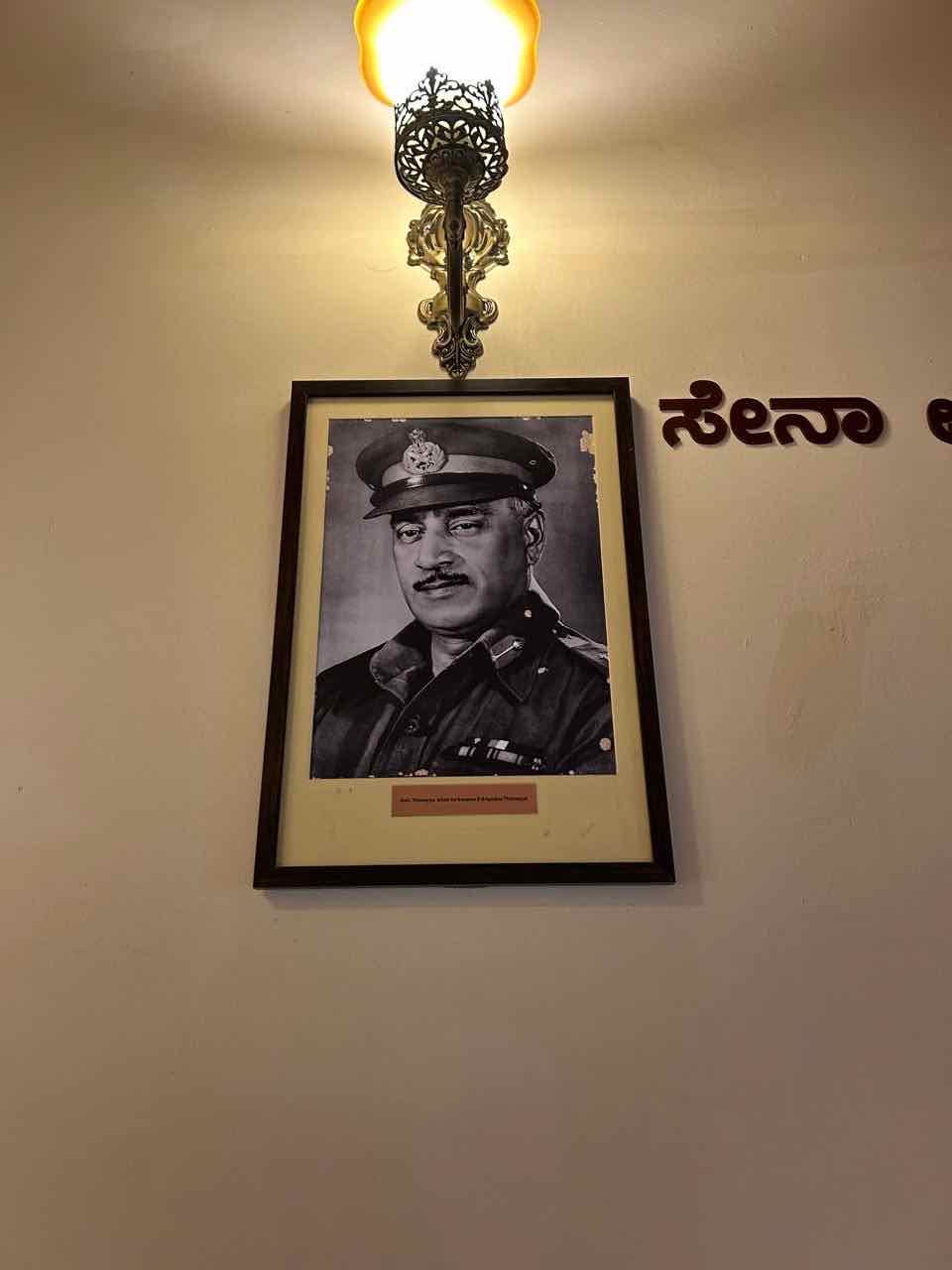
Most in my generation would agree that General K S Thimayya, DSO, (1906-1965) was one of the finest Generals to command the Indian Army. “Timmy” as he was popularly known as was the Chief of Army Staff from 1957 to 1961. As a keen student of military history, I was delighted to recently visit the Museum set up in his memory. This is in his ancestral home, “Sunnyside” in Madikeri, Kodagu his hometown.

This Museum is truly a labour of love. Those responsible must be commended for the pains taken to establish such an informative and interesting place. A fitting tribute to a great son of India. It was inaugurated by the then President of India, His Excellency Ram Nath Kovind in February 2021. The museum traces Thimayya’s life from his early childhood till his death. This is especially useful for the younger generations who may not know much about Gen Thimayya. The General passed away in 1965 while commanding the United Nations Peace Keeping Force in Cyprus.

He had an illustrious career of 35 years in the Indian Army. He was a product of the Prince of Wales Royal Indian Military College, Dehradun and the Royal Military College, Sandhurst. Commissioned in the then British Indian Army in 1926 he first served in the Highland Light Infantry as was the practice at that time. Indian officers were first attached to a British regiment before moving to an Indian regiment. His was the 19th Hyderabad Regiment which later became the Kumaon Regiment. This famous Regiment has given us three Chiefs of Army Staff and two posthumous winners of the Param Vir Chakra. Thimayya was awarded the prestigious Distinguished Service Cross (DSO) by the British during the Burma campaign.

In his exceptional career, he became the first Indian to command a brigade in the days of the British Raj. He became famous for his professional work during the 1948 Kashmir War with Pakistan. Thanks to his remarkable personality he handled two difficult assignments for the United Nations in Korea and in Cyprus.

His years as the Chief of Army Staff were unfortunately not as satisfying as he would have wished. The Prime Minister, Jawaharlal Nehru and Defence Minister Krishna Menon were seemingly jealous of his popularity. In those days military coups were quite common in Asia. They may have feared that in India too the military would carry out a coup.

Thimayya’s conduct based on his principles created more problems for him. First was the incident when he stood up to Nehru and the powerful Chief Minister of the Punjab, Pratap Singh Kairon to defend the honour of a woman. After a series of other disagreements with the Defence Minister in 1959, General Thimayya handed in his resignation. Prime Minister Nehru persuaded him to not publicise his resignation to which Thimayya agreed as a gentleman. Much to his chagrin Nehru went ahead and spoke about it in the Lok Sabha.

Many say that General Thimayya was not as effective after this unsavoury incident. His recommendations were not accepted and he lost his influence. After he retired from the Army, India – under the same leadership of Nehru and Menon- was thrashed by the Chinese in 1962. This article in the Hindustan Times has more details.

India’s loss was the United Nations gain. Post his retirement , he was requested by the United Nations Secretary General to head the United Nations Peace Keeping Force in Cyprus.

The museum is well maintained and a fitting tribute to one of India’s greatest soldiers. The moving tributes in the visitor’s book show how highly General Thimmaya is still regarded- 59 years after his death. When you are next in this beautiful part of India, please pay homage to General Thimayya by visiting this museum in Kodagu.

Exploring San Francisco in a Waymo Driverless Car

Perhaps in 2019, while walking in San Francisco’s Mission District, a white coloured car with some gizmo rotating on its roof caught my attention! I hadn’t seen anything like that before. I was told it was one of those experimental driver less cars! The stuff on the roof were sensors, cameras, and God knows what which enabled the car navigate busy city roads without a human being at the driving wheel!

Cut to October 2024. We were back in San Francisco and were eagerly waiting to take our first ride in a Waymo- a self-driving/driverless car service, which is become increasingly popular by the day. These cars are now called autonomous vehicles or robotaxis. It was very simple really. I downloaded the Waymo App, created an account and was ready to go!

Shobana and I decided to visit Cole Valley for old times sake. Using the App, we hailed a Waymo for a ride from the Luma Hotel where we were staying. The Waymo pulled up to exactly where we stood. The App had advised me to pull the door twice. Once to unlock the door and the second to open the door. As we settled ourselves comfortably in the spacious back seat of the all electric Jaguar IPACE, we couldn’t help marvelling that there was no one in the driver’s seat to take us to our destination! Our thoughts were interrupted by an announcement reminding us to fasten our seat belts! We did that- and we were off.

Our ride took about 24 minutes and covered 4.5 miles in San Francisco traffic. Never once did we feel nervous. Not even when our Waymo halted at the top of a steep slope when the lights changed to red. When the lights changed the wheel spun and we were off again taking a perfect turn.

There was light music playing in the background. We could have changed the music and chosen something else but we were much too busy enjoying the ride. To our delight at a traffic signal, we stopped and another Waymo pulled up beside us!! It was mind boggling for us to see our Waymo speed up when required, slow down when appropriate, stop where and when required- all without a driver!!

I have written about our personal experience of the ride. For those who want more in depth information of how it works, please do check out The Waymo Driver in their website.

Soon after, we reached our destination at exactly the time projected at the start of our drive! Congratulations to the folks at Waymo! This was a memorable experience for us. Our Waymo ride was way more comfortable and exciting than we expected!

Towards A Healthy Life

It was a little difficult to digest at first but I had to accept my friend was right. She pointed out that we were now in the eighth decade of our lives!! When you get to my age, you tend to be more philosophical about things around you. One thing is certain- your health is key to your overall success in life. I know of many cases of very wealthy people not being able to enjoy what they have earned. Not because they don’t want to spend, but because their health just does not allow them to live the life they would like to. Indeed, health is wealth!

Paying attention to health is not just for older people as was the popular opinion in my youth! If anything, it applies more to younger people than ever before. I was astonished to read that in Bengaluru doctors have found a 30 % increase in people in their 30s having bypass surgery!

Stress levels too are growing alarmingly as seen by that startling statistic in the previous paragraph! In my experience, reading has been a good habit to cultivate and pursue across all ages. Read from your device or from a physical book – but do read! I know that many young people don’t read as much as we used to at their age. “Where’s the time, uncle?” is a plaintive cry! The answer is simple. You have to make time for what you consider important. Check out this article by Jim Kwik. Investing just 30 minutes a day to reading- whatever you like- can do your health a world of good.

And for us older folk? Critical is the need to keep our brain engaged and active! Most of the points mentioned in this article from the Harvard Medical School on keeping your brain young appear to be just common sense! But as the old gag goes, common sense is sadly often uncommon!

Abraham Lincoln put it so well when he said, ” “In the end, it’s not the years in your life that count. It’s the life in your years.”