“Aavarana: The Veil” by Dr S L Bhyrappa

I recently read a book written by the noted Kannada writer Dr S L Bhyrappa. He needs no introduction having been a best selling novelist for over 25 years, apart from being a profound scholar. The book is titled, ”Aavarana: The Veil” . I read the book translated into English by Sandeep Balakrishna.

To start with, the story is extremely well written for a complex subject. It covers so much ground without becoming dry and boring in any way or at any time. It’s about the life of Lakshmi -from a small town in Karnataka -who meets, falls in love and gets married to Amir her classmate at the FTII much against the wishes of her conservative parents. As is to be expected, the couple have to face the hardships one would most commonly come across in an inter faith marriage. Her father virtually cuts off relations with her because she married a Muslim much against his advice.

When she lives in Amir’s house with his parents and other relatives, Lakshmi now known as Razia, realises that the differences in their faiths was much more than she imagined. The atmosphere becomes claustrophobic for her. She feels her every move is watched with intense scrutiny waiting for her to make- one more mistake. The story then captures her travails and disappointments till eventually the fateful day comes when Amir utters those three dreaded words: Talaq Talaq Talaq to divorce her. (Please remember this book was first written in 2014, before Triple Talaq became outlawed in India in 2017) .

Razia, now Lakshmi once again, has no choice but to return to her village. Her parents have died. Older and wiser now, she reflects on how they must have felt when she remained adamant that she would marry Amir. Her biggest regret is that she could not meet her parents before their deaths. To her surprise, she finds her father has left behind a treasure trove of material assiduously collected over the years. This leads her to write a book.

Interestingly, the difficult technique of writing a story within another is brilliantly and deftly handled by Dr Bhyrappa. Within Razia/Lakshmi’s story, in parallel is a story she is writing about the Mughal period. She writes of rulers like Aurangzeb who wantonly destroyed thousands of Hindu temples.

Through this book, Dr Bhyrappa raises the issue of how many post Independence writers in India have downplayed many vile aspects of Mughal rule.

I think this book deserves to be widely read. I would recommend this strongly to all, especially the youth of India who for too long have heard only one side of the story.

RCB- Romanticising The Loser

As a die-hard fan of this cricket franchise, I feel the think tank of Royal Challengers Bengaluru have had it all too easy for far too long! Year after year we have flattered to deceive. I can’t ever forget the first match of the inaugural IPL in 2008. Brendon McCullum of KKR took us to the cleaners scoring 158, we scored 82 – and we haven’t fully recovered yet! I have watched virtually every match of RCB- both men and women- over the years so I write this with considerable anguish.

The men’s team haven’t won even once in 18 years. This makes me believe RCB has made a class act of romanticising the loser! A powerful PR ecosystem and social media presence have almost indoctrinated fans in their millions to believe it is perfectly ok to lose -as long as you try!!! Instead of a strong killer instinct with little or no patience for failures, we seemingly have a bland acceptance of fate.

I hope and pray 2025 will be a different outcome but based on recent events in the ongoing Women’s IPL, I have my grave doubts. Which leads me to the question: who is responsible for decisions ? The coach, captain, owners or none of them?? Who is the think tank for RCB? Are they in any way accountable for results?

In the Women’s IPL, RCB finished a disappointing 4th in the first edition but did really well to win the championship last year. This means we are the defending champions in 2025.

Most teams do well in their home grounds- there are many reasons for this most of which are quite obvious. We somehow don’t. The fact that RCB have lost both home games played so far is shocking to say the least. Yes, of course, they tried their best; there were injuries which prevented other good players from playing etc, but why did we make some elementary blunders???

Here are two, according to me: 1. In the first match at Bengaluru versus a strong Mumbai Indians team, knowing the size of the ground, the tendency of batters to try to hit sixes, how come we had a slow over rate that penalised us in the end. With one fielder less in the outfield, was it smart cricket? 2. In the same match, wasn’t someone keeping an eye on who’s bowling? We know the 19th and 20 th overs are the most crucial. Leaving the 19th over to Kanika Ahuja, a well-meaning but not the leading spinner of the team was asking for trouble. We could have perhaps won but we lost this game in the last ball!!!

And more blunders came up in the very next match versus less fancied UP Warriorz. 1. Renuka Singh giving away 17 runs in that one over virtually gave away the match. She may have the Purple Cap but is not the best bowler at the death. 2. Worse was to follow. In the Super Over, Kim Garth was excellent to restrict UP Warriorz to just 8 runs. We needed 9 to win. Instead of sending in one in red hot form- Elyse Perry ( holder of the Orange Cap with 235 runs and an average of 117 and a strike rate of 160 including 90 not out in 56 balls in this very match), we sent Richa Ghosh – and worst of all Smriti Mandhana went in herself when she has not been a great player of spin bowling. Sophie Eccelstone added to her batting performance of 33 which got MI to the super over, by defending 8 runs. She gave away only 4!! How can you win matches if you can’t score 5 runs in the crucial make or break over????

Still we will rationalise and say it was only a game, they did their best, we are sorry to disappoint our fans, we will come back stronger next time etc etc. Another example of romanticising the loser!

I sometimes wonder based on what I have seen in the IPL over the years, whether it is the owner’s ego that propels the team’s urge to win! Looks like the Ambanis, the Goenkas, the Marans, and SRK don’t take kindly to defeat- though I am sure they accept they can’t win every game every year. RCB has no owner in that sense. We started off with a single owner, Dr Vijay Mallya. Love him or hate him he was there in your face. Today RCB is owned by United Spirits Limited, part of the Dieago Group. It is a corporate entity. Winning or losing a IPL title may not matter much to the company executives- as it does to us fans. They are more interested in revenues from advertising, publicity campaigns, brand, marketing, and social media presence. We are more interested in winning matches!

“Nine Minutes Eleven Seconds” : L V Pederson

Firstly, hearty congratulations to L.V. Pederson for writing such a blockbuster of a debut thriller. “Nine Minutes Eleven Seconds” is the title of Pederson’s fast- paced novel published in January 2025. Guess what? Pederson worked as a film censor in Canada and a script writer in Hollywood, apart from being an entrepreneur and innovator! He brings all these experiences to bear in this thriller which I enjoyed reading!

The story begins with a young, attractive lady called Madison Maxwell joining Know Inc, one of the most renowned tech firms in the world. This, of course, is situated in the Silicon Valley. Madison wants to put her past life at Boston behind her- to make a fresh start in a place which seems so promising. She feels this firm and her position as Executive Assistant to the Vice President would fulfil her career dreams. The plot of the story that unravels is crisply woven together with apt back stories. This makes for very exciting reading.

Shortly into the job, Madison comes across people who are totally different from who they at first appear to be. She comes across several mysteries in that firm which folks don’t talk about. Circumstances force her into situations which test her endurance to the limits. To complicate matters further, there is a deeply personal angle from her past which resurfaces to haunt her.

The story brings back to the reader memories of that unforgettable tragedy- the 9/11 terror attacks on the United States. It is a gripping story which you must read for yourself! Highly recommended.

“The Brave :Param Vir Chakra Stories” by Rachna Bisht Rawat

Over the last few decades, I stay glued to the television on India’s Republic Day -January 26- to see the parade. This year too I look forward to the parade. Most of all I am waiting to see and pay homage to the three surviving winners of the Param Vir Chakra. This honour is India’s highest military honour and is like the Victoria Cross in the UK or the Medal of Honour in the United States. The memory of the Param Vir Chakra winners was triggered by a book I read recently. It is called, “The Brave: Param Vir Chakra Stories” by Rachna Bisht Rawat. She is a journalist and writer with a family background steeped in military history.

This book was one of the early books about the Param Vir Chakra winners. It was first published by Penguin in 2014. Since then there have been many more books on these national heroes. Since I am fascinated by these stories this book was of considerable interest to me. Thanks to the internet and the media, in recent years many of them have become household names, like Capt Vikram Batra of Kargil War fame. However, to be honest, I am ashamed to say that some of the early winners of the Param Vir Chakra were unknown to many in my generation. One of them was Major Rama Raghoba Rane of the Bombay Sappers who got his PVC in the Indo-Pak Kashmir War in 1947. He was one of the rare braves who lived to receive his award. Most of the Param Vir Chakras were awarded posthumously. This means the winners of the nation’s highest gallantry award made the supreme sacrifice while carrying out their acts of bravery.

All the winners were worthy of the high honour bestowed upon them by a grateful nation. It would be unfair to single out one or the other from amongst them. However, we are humans and cannot resist having our favourites. Mine have been Major Shaitan Singh of 13 Kumaon of Rezang La fame during the Indo-China War of 1962 and 2nd Lt Arun Khetarpal of 17 Horse, who won his award in the Indo-Pak war of 1971. Mention must be made of Flying Officer Nirmal Jit Singh Sekhon, 18 Squadron, IAF, who won his PVC during the Indo-Pak War of 1965. Till date, he remains the only Param Vir Chakra awardee who was not from the Indian Army.

Ms Rawat has written about the battles in which the heroes won their awards and about these men themselves. Their stories have been pieced together following interviews with family, colleagues, superior officers and others who could speak authoritatively about their feats and about themselves as persons. Overall, it was well written as it focussed as much on the human element of the awardee as it did on their feats of incredible bravery facing all odds.

These errors may have been corrected in subsequent editions but the Kindle version of the book I read had two which were unexpected. It is stated that “Nehru appointed Lt Gen B M Kaul as Chief of Army Staff in 1961”. Gen. Kaul was undoubtedly his favourite and perhaps informally overshadowed the then Chief of Army Staff, General P N Thapar but he was never the Chief of Army Staff. It also refers to the late Capt Saurabh Kalia of 4 th Battalion, Jat Regiment , as Major Kalia. Capt Kalia, you may recall, was perhaps the first casualty of the Kargil War. He was cruelly tortured by the enemy. I am not aware of his promotion to Major nor could I find this substantiated anywhere. These are minor glitches in what’s otherwise a good read. I wish more of our youth read this book to be inspired by these heroes.

And yes, please do watch the Republic Day Parade on January 26 to salute the surviving three Param Vir Chakra winners: Sub Major (Hon. Capt) Bana Singh, 8 J & K Light Infantry; Subedar Major(Hon. Capt) Yogendra Singh Yadav, 18 Grenadiers; and Subedar Major (Hon. Capt) Sanjay Kumar., 13 JAK Rifles. Jai Hind!

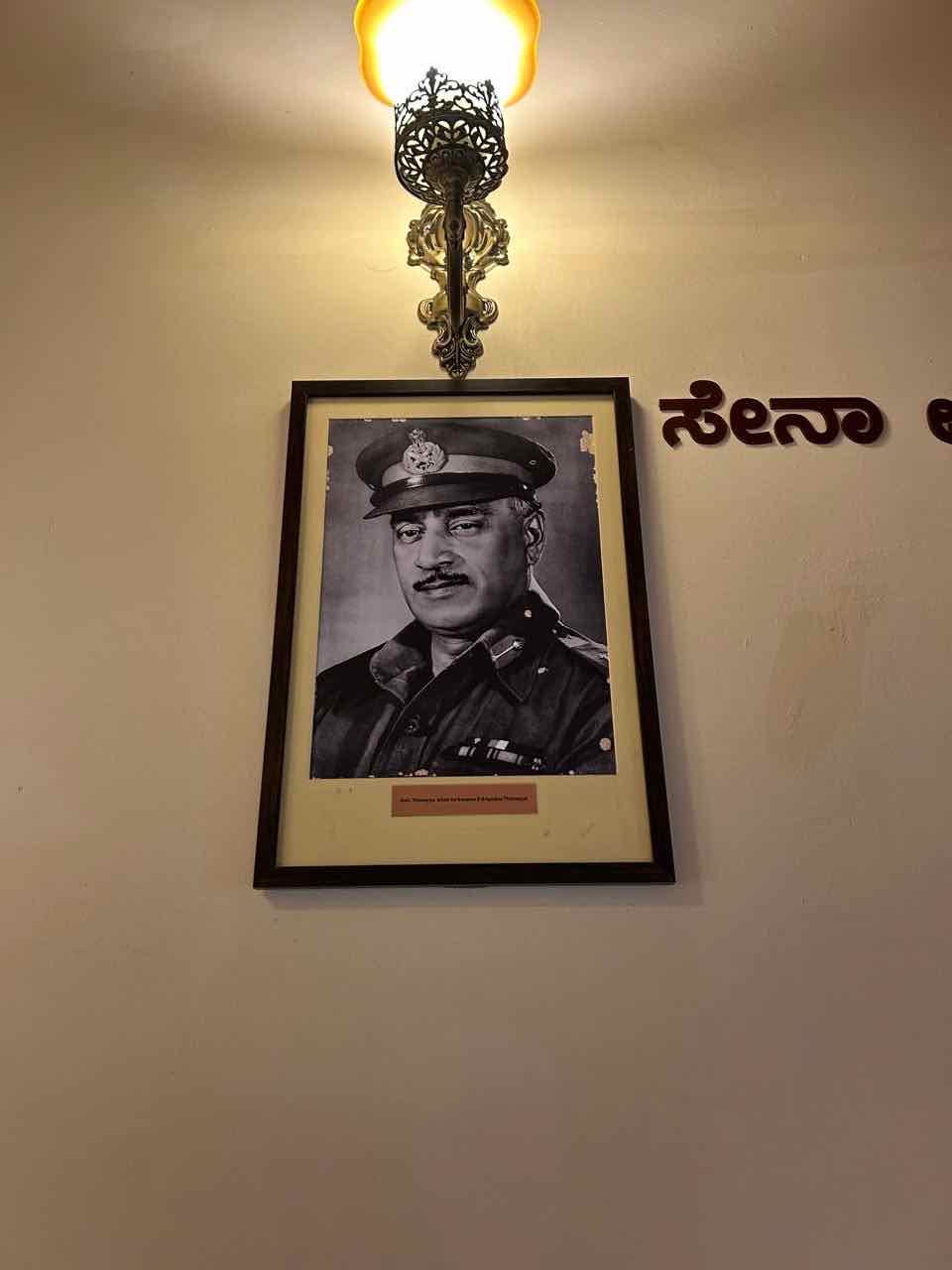
General K S Thimayya: Legacy of a Distinguished Soldier

Most in my generation would agree that General K S Thimayya, DSO, (1906-1965) was one of the finest Generals to command the Indian Army. “Timmy” as he was popularly known as was the Chief of Army Staff from 1957 to 1961. As a keen student of military history, I was delighted to recently visit the Museum set up in his memory. This is in his ancestral home, “Sunnyside” in Madikeri, Kodagu his hometown.

This Museum is truly a labour of love. Those responsible must be commended for the pains taken to establish such an informative and interesting place. A fitting tribute to a great son of India. It was inaugurated by the then President of India, His Excellency Ram Nath Kovind in February 2021. The museum traces Thimayya’s life from his early childhood till his death. This is especially useful for the younger generations who may not know much about Gen Thimayya. The General passed away in 1965 while commanding the United Nations Peace Keeping Force in Cyprus.

He had an illustrious career of 35 years in the Indian Army. He was a product of the Prince of Wales Royal Indian Military College, Dehradun and the Royal Military College, Sandhurst. Commissioned in the then British Indian Army in 1926 he first served in the Highland Light Infantry as was the practice at that time. Indian officers were first attached to a British regiment before moving to an Indian regiment. His was the 19th Hyderabad Regiment which later became the Kumaon Regiment. This famous Regiment has given us three Chiefs of Army Staff and two posthumous winners of the Param Vir Chakra. Thimayya was awarded the prestigious Distinguished Service Cross (DSO) by the British during the Burma campaign.

In his exceptional career, he became the first Indian to command a brigade in the days of the British Raj. He became famous for his professional work during the 1948 Kashmir War with Pakistan. Thanks to his remarkable personality he handled two difficult assignments for the United Nations in Korea and in Cyprus.

His years as the Chief of Army Staff were unfortunately not as satisfying as he would have wished. The Prime Minister, Jawaharlal Nehru and Defence Minister Krishna Menon were seemingly jealous of his popularity. In those days military coups were quite common in Asia. They may have feared that in India too the military would carry out a coup.

Thimayya’s conduct based on his principles created more problems for him. First was the incident when he stood up to Nehru and the powerful Chief Minister of the Punjab, Pratap Singh Kairon to defend the honour of a woman. After a series of other disagreements with the Defence Minister in 1959, General Thimayya handed in his resignation. Prime Minister Nehru persuaded him to not publicise his resignation to which Thimayya agreed as a gentleman. Much to his chagrin Nehru went ahead and spoke about it in the Lok Sabha.

Many say that General Thimayya was not as effective after this unsavoury incident. His recommendations were not accepted and he lost his influence. After he retired from the Army, India – under the same leadership of Nehru and Menon- was thrashed by the Chinese in 1962. This article in the Hindustan Times has more details.

India’s loss was the United Nations gain. Post his retirement , he was requested by the United Nations Secretary General to head the United Nations Peace Keeping Force in Cyprus.

The museum is well maintained and a fitting tribute to one of India’s greatest soldiers. The moving tributes in the visitor’s book show how highly General Thimmaya is still regarded- 59 years after his death. When you are next in this beautiful part of India, please pay homage to General Thimayya by visiting this museum in Kodagu.

“Capture The Dream: The Many Lives of Capt. C P Krishnan Nair” by Bachi Karkaria

It was only a few days ago that I had dinner at The Leela on Bengaluru’s Old Airport Road. We enjoyed the drinks at the tastefully furnished Library Bar followed by a delicious dinner at Jamavar, the Indian restaurant there. As we savoured the food and the overall ambience, my mind went to the book I recently read about the man who founded the Leela Group of Hotels in India.

Sadly, the Leela at Bengaluru no longer belongs to the Leela Group as we know it. But therein lies the story of a truly remarkable man. He came from a very under privileged background to become -in his heyday- one of India’s biggest hoteliers: Capt. C P Krishnan Nair.

Bachi Karkaria’s book ” Capture The Dream: The Many Lives of Capt. C P Krishnan Nair” (Juggernaut, 2020) portrays the man as he was- larger than life, generous to a fault, a stickler for detail, and one who always strove for excellence. He dared to dream big and perhaps became over ambitious at one stage of his life. He set new standards in hoteliering ensuring that his chain of luxury hotels -named after his wife, Leela- grew at a scorching pace.

Capt Nair served in the Indian Army in the days before Independence. He had no prior experience of running a hotel when he ventured into the very demanding hospitality industry when in his 60s! From a humble background, he first gained fame in the textile export business, pioneering “Bleeding Madras” which became a rage in the 1970s.

Reading the book makes you feel you have met the man himself. He was a man who lived life to the full, always optimistic, always looking for an opportunity to further the interest of his business empire. A true bon vivant – who lived life to the full- and on his own terms. He had the human touch and could mingle comfortably across the spectrum of society. He was as much as ease with Kings and Heads of State as he was with the doormen and gardeners at his hotels.

Overall, a well- narrated story of an extraordinary nationalist who was immensely proud of being an Indian. Highly recommended.

“Shanti” by Arun Patel

You, like me, would associate every place you have been to with some sights and sounds. I am back in Bengaluru enjoying the lovely weather we are blessed to have. Being fond of nature, I admire the trees and greenery near where we live. I find this relaxing especially with birds chirping in the trees and shrubs. ” If you truly love nature, you will find beauty everywhere” said Vincent van Gogh!

We recently visited the United States. In this trip we had the pleasure of spending a few days at The Sea Ranch, in Northern California. The waves of the Pacific Ocean pounding the beaches, coves and craggy cliffs is a sight to behold.

At The Sea Ranch, we were delighted to meet with Arun Patel, the renowned photographer. To know more about his brilliant work do check out his website : Arun Patel Studio . You can also follow him on Instagram.

When we met at the Sea Ranch Lodge, we heard first hand from him about his passion for photography. He described how he took to this highly interesting and challenging field. I can only imagine and admire the immense patience he must have while photographing.

His book, “Shanti” (which comes from a Sanskrit word for Peace, Calm, and Quiet) is a collector’s item for sure. The layout of the book is striking. There is little or no text. The pictures, printed on high quality paper, are crisp, clear, and speak for themselves. You can interpret them in your own way. Frankly, you lose all sense of time as you admire each of the pictures in the book.

All the pictures in ” Shanti” have one thing in common. They were shot by Arun in and around The Sea Ranch. They portray the many different aspects of this lovely place. The pictures range from the redwoods on the hills to the waters of the Pacific Coast. Some pictures have stayed in my mind. The mist swirling midst the tall redwood trees. The rays of sunshine illuminating a path in the woods. The cascade of spray as the waves meet the rocks on the coast. The weather beaten rocks themselves that have been through many a storm.

Interestingly, Arun shoots all his pictures in black and white. This choice stands out in today’s world. You will find most pictures are in colour perhaps thanks to modern technology.

The beautiful photographs in “Shanti” reminded me of this famous quote by Andri Magdalena Cauldwell. ” To see in colour is a delight for the eye, but to see in black and white is a delight for the soul. “

More power to you, Arun! I look forward with great interest to your future works.

Exploring San Francisco in a Waymo Driverless Car

Perhaps in 2019, while walking in San Francisco’s Mission District, a white coloured car with some gizmo rotating on its roof caught my attention! I hadn’t seen anything like that before. I was told it was one of those experimental driver less cars! The stuff on the roof were sensors, cameras, and God knows what which enabled the car navigate busy city roads without a human being at the driving wheel!

Cut to October 2024. We were back in San Francisco and were eagerly waiting to take our first ride in a Waymo- a self-driving/driverless car service, which is become increasingly popular by the day. These cars are now called autonomous vehicles or robotaxis. It was very simple really. I downloaded the Waymo App, created an account and was ready to go!

Shobana and I decided to visit Cole Valley for old times sake. Using the App, we hailed a Waymo for a ride from the Luma Hotel where we were staying. The Waymo pulled up to exactly where we stood. The App had advised me to pull the door twice. Once to unlock the door and the second to open the door. As we settled ourselves comfortably in the spacious back seat of the all electric Jaguar IPACE, we couldn’t help marvelling that there was no one in the driver’s seat to take us to our destination! Our thoughts were interrupted by an announcement reminding us to fasten our seat belts! We did that- and we were off.

Our ride took about 24 minutes and covered 4.5 miles in San Francisco traffic. Never once did we feel nervous. Not even when our Waymo halted at the top of a steep slope when the lights changed to red. When the lights changed the wheel spun and we were off again taking a perfect turn.

There was light music playing in the background. We could have changed the music and chosen something else but we were much too busy enjoying the ride. To our delight at a traffic signal, we stopped and another Waymo pulled up beside us!! It was mind boggling for us to see our Waymo speed up when required, slow down when appropriate, stop where and when required- all without a driver!!

I have written about our personal experience of the ride. For those who want more in depth information of how it works, please do check out The Waymo Driver in their website.

Soon after, we reached our destination at exactly the time projected at the start of our drive! Congratulations to the folks at Waymo! This was a memorable experience for us. Our Waymo ride was way more comfortable and exciting than we expected!

Towards A Healthy Life

It was a little difficult to digest at first but I had to accept my friend was right. She pointed out that we were now in the eighth decade of our lives!! When you get to my age, you tend to be more philosophical about things around you. One thing is certain- your health is key to your overall success in life. I know of many cases of very wealthy people not being able to enjoy what they have earned. Not because they don’t want to spend, but because their health just does not allow them to live the life they would like to. Indeed, health is wealth!

Paying attention to health is not just for older people as was the popular opinion in my youth! If anything, it applies more to younger people than ever before. I was astonished to read that in Bengaluru doctors have found a 30 % increase in people in their 30s having bypass surgery!

Stress levels too are growing alarmingly as seen by that startling statistic in the previous paragraph! In my experience, reading has been a good habit to cultivate and pursue across all ages. Read from your device or from a physical book – but do read! I know that many young people don’t read as much as we used to at their age. “Where’s the time, uncle?” is a plaintive cry! The answer is simple. You have to make time for what you consider important. Check out this article by Jim Kwik. Investing just 30 minutes a day to reading- whatever you like- can do your health a world of good.

And for us older folk? Critical is the need to keep our brain engaged and active! Most of the points mentioned in this article from the Harvard Medical School on keeping your brain young appear to be just common sense! But as the old gag goes, common sense is sadly often uncommon!

Abraham Lincoln put it so well when he said, ” “In the end, it’s not the years in your life that count. It’s the life in your years.”

“The Teachings Of Shirelle” by Douglas Green

We are accustomed to being told to look around us and learn lessons from others- human beings, of course. But learning lessons from a dog? That too a stray from the pound that got the nickname, “Knucklehead”?? This is what “The Teachings of Shirelle: Life Lessons from a Divine Knucklehead” by Douglas Green is all about. First published in 2015 by Cavalleria Press, this book makes for delightful reading. It vividly captures that beautiful – and sometimes stressful- relationship between a dog and her owner.

Green writes with great feeling about the twelve years he and Shirelle -his dog – spent together. She became the centre of his life, particularly when she was diagnosed as having malignant tumours. The story of how he never gave up hope- enjoying every minute they spent together – knowing the end had to come, touches you so deeply. He says, “Shirelle lived with no apparent awareness of death but lived each moment, as always , to the fullest.” How true it is that we take time for granted, postpone or ignore things we should do for our loved ones, until we are bluntly told that the countdown has begun. The time ahead is limited. The tough part is that no one can say with certainty when the end would come. They could only say that it would be upon him- any day now!

The story begins with the author deciding to get a dog for himself. He visits a pound in Los Angeles, where he lives, to take home a stray. His family had always got strays from the pound and never cared for a dog’s pedigree. As he walks along the cages in the pound, something clicks within him when he sees a pup which he later discovers is part husky-part Saint Bernard. She is taken home and later christened ” Shirelle”.

Douglas Green is a psychotherapist, writer and stage director. He has started, ” AskShirelle” to keep alive her memory and help kids, teens and their parents. In his practice, he uses much of what he learnt from Shirelle- the knucklehead from the city pound who changed his life- and perhaps that of so many others!