“The Battle Of Rezang La” by Kulpreet Yadav

The defeat of units of the Indian Army at various places by the Chinese in the 1962 War left deep scars in the psyche of most Indians. However, there were a few isolated cases of incredible bravery. The Battle of Rezang La was one of them. I was 11 years old in November 1962 when the epic battle was fought till the last bullet and the last man by the valiant men of 13 Kumaon under the leadership of Major Shaitan Singh.

Kulpreet Yadav’s book, “The Battle of Rezang La” published by Penguin Veer in September 2021 is a must read for all interested in modern Indian history. It retraces the events that took place on November 18, 1962 in the intense cold at heights over 18,000 feet in Rezang La. Men of C (Charlie) Company of 13 Kumaon faced enemy forces that vastly out numbered them. The Chinese had location advantages and far superior weapons and equipment. The Ahirs from Haryana who made up C Company had raw courage and a determination not to yield an inch of Indian territory.

The 1962 Indo-China War started in October 1962 and ended in December 1962 . Short though the period of conflict was, these few months took a heavy toll of India’s soldiers. More often than not they fought with poor clothing, totally ill equipped to fight in the intense cold of the mountain areas they were tasked to defend against overwhelming odds. Of course, the War also affected India’s political and military leadership. Prime Minister Nehru was never the same again, and died within the next two years. The Defence Minister Krishna Menon was sacked and the Army Chief, Gen P N Thapar had to resign. This book details one of the battles forced upon the Indian Army by the poor strategy and vision of Nehru, Menon and Thapar.

The main difference between this and many other battles in the short war was that the Indian officers and men displayed phenomenal courage and fortitude. Kulpreet Yadav (who retired as Commandant in the Indian Coast Guard after 23 years service) writes that the debacle of 1962, where a Nehru-led India lost humiliatingly to China, was not allowed to be discussed in public discourses or books. That facts about the Battle of Rezang La were not known at all to the public at large which vastly disappointed the author. This motivated him to research this battle which has few, if any, parallels in the annals of military history.

In the first week of February 1963, a Ladhaki shepherd discovered the frozen bodies of the Kumaonis. They were found in the positions they had died, carrying their weapons with them. Most of them had many bullets in their bodies. Amongst the dead was Major Shaitan Singh, the Company Commander. He was later awarded the Param Vir Chakra – India’s highest honour for displaying acts of valour during war- posthumously.

On that day in 1963, the bodies of 96 soldier of Charlie Company were recovered from Rezang La and cremated with full military honours amid the chanting of Vedic mantras. The combined funeral pyre was lit by Brig. T N Raina, the Brigade Commander. Many years later, he became the Chief of Army Staff of the Indian Army.

The author did considerable personal research before writing this book. Being from Haryana himself, he met families of the brave Ahirs from that state who made up the complement of C Company of 13 Kumaon. He also talked to officers and men who took part in the battle, though they were not on the spot in Rezang La that fateful day in November 1962.

Charlie Company of 13 Kumaon was given the honour of being called “The Rezang La Company.” Today there is a memorial in their honour in Ladakh. The inspiration is: “To the sacred memory of the heroes of Rezang-La
114 martyrs of 13 Kumaon who fought to the last man last round
against hordes of Chinese on 18 November 1962. Built by all ranks 
13th Battalion, the Kumaon Regiment.”

I would recommend this book to all students of military history and modern Indian history. I also hope the story of the famous Battle of Rezang La will reach the youth of our country.

Remembering The Emergency

On June 25, 2025, some five weeks ago, I don’t know how many of you remembered June 25, 1975 – the day the infamous Emergency was declared in India 50 years ago! All of us old enough to do so remembered the Declaration of Emergency by Prime Minister Indira Gandhi’s Congress Government on that day. More than the declaration day itself, we still vividly remember the horrors perpetrated during the Emergency which ran from June 25, 1975 to March 21, 1977.

For those who have no idea what went on all those decades ago, this Factsheet released by the Press Information Bureau throws considerable light on those dark days. All of us were affected, some more than others. Some of us were lucky to come away unscathed. A few images still haunt me after all these years. The first is of George Fernandes shackled like a criminal. The second is of actress Snehalatha Reddy who died a mere 5 days after her release from prison. The third is men being forced to undergo sterilisation.

While there were many acts that went against the principles of a free democracy, the sterilisation campaign was by far the most heinous. At that time, I worked for a cement company in a remote part of the country. One day the Headmaster of the School our Company ran for the benefit of the employees’ children was considerable agitated. He said he had received orders – verbal of course- from the relevant Government authorities to marshal all the male staff of the school to a public hospital. The reason for this was clear. They were to be sterilised as that Officer had a target to achieve! Luckily, this was not a Government run School though it was recognised by the Government. It received no funds from the Government. This and the firm diplomatic nudge by our senior management enabled the Headmaster and his staff escape a fate -inevitable for the less fortunate.

I laugh to myself when I read reports in the newspapers in which opposition leaders accuse the current Prime Minister Narendra Modi of being fascist! Fascists like Adolf Hitler carried out over 4,000,000 sterilisations during 12 years of Nazi rule. In our 1975-77 Emergency, 1.07 crore sterilisations took place. Written as numerals that is: 10,700,000.

“Meet The Kellys” by Chris Enss

When you hear there was a gangster in the 1930s in the US called George “Machine Gun” Kelly, what kind of guy would you think he was? Like me, you may have imagined a killer who shot people using a machine gun. In reality, George Kelly Barnes was a criminal who specialised in boot legging, bank robberies and kidnapping. He never killed anybody, leave alone with a machine gun!!

I came to know this and other interesting facts on reading ” Meet The Kellys” by Chris Enss. Thanks to #NetGalley I got a review copy of #MeettheKellys. This book – described as- The True Story of Machine Gun Kelly And His Moll Kathryn Thorne- is scheduled to be published by Kensington Publishing later this month.

Following the years of the Great Depression and Prohibition, the 1930s saw many criminals gain notoriety in the United States. “Machine Gun” Kelly was one of them, and his name was as well known as others like Al Capone, Ma Barker, John Dillinger, and the couple : Bonny and Clyde. Basing her story on newspaper articles and recollections of those who lived in those times, the author describes the lives of George Kelly and his wife Kathryn Thorne.

As you read this well-researched book, you will understand the personalities of this couple and the dynamics that were at play between them. George Kelly Barnes was from Memphis, Tennessee, and had an unhappy childhood. He wanted the good life and wanted money without working for it at all. Kathryn Thorne was already divorced twice when she first met him. She was street smart, good looking, willing to take risks and loved a life of luxury. She felt that Kelly would be the one to provide her with all that she wanted. All in all, she was the gangster’s moll.

The book describes in detail how the Kellys kidnapped Charles Urschel, the oil tycoon and the trial that followed. This was the biggest crime they committed. The case caught the attention of the media all over the country. Kidnappings were happening in plenty at that time and Urschel was kidnapped shortly after the Lindbergh case. This was the first big case of this type assigned to the FBI as kidnapping had been made a Federal offence.

The book paints a realistic picture of life in the United States in the 1930s. Poverty, greed, ambition, desperation and even little or no fear of the law made many take to crime. Some cases were more infamous than others. George “Machine Gun” Kelly and Kathryn Thorne were one amongst them.

I liked the book which was informative and interesting .

“Kitne Ghazi Aaye Kitne Ghazi Gaye”: Lt Gen. KJS Dhillon (Retd)

Of course, I had heard of General Dhillon, especially when he commanded the Indian Army’s 15 Corps in Kashmir. I was thrilled to hear that he had published his memoirs having heard so much about this illustrious soldier. I had the pleasure of reading, “Kitne Ghazi Aaye, Kitne Ghazi Gaye” recently. This book was published by Penguin Veer in January 2023. I know he has since written another book but we will come to that in due course of time.

As an avid reader of contemporary military history, I have read the biographies of many Generals/ Admirals/Air Chief Marshals from the days of World War 2. Unfortunately, I don’t think there are many about Indian military leaders. Yes, there have been books on Field Marshal Cariappa and General K S Thimayya but not on many others, as far as I know. It was refreshing therefore to read a more contemporary account of a General of great repute who retired from active service but recently.

In his well-written book which is full of interesting anecdotes, General Dhillon takes us back to his childhood in Punjab. From a young age, he and his friends wanted to be in the Indian Army. Not surprising considering that many of their family had served the paltan. The book takes us on General Dhillon’s journey from being a young cadet at the National Defence Academy to rising to the high position of Director General, Defence Intelligence Agency. In the course of 35 years in uniform, General Kanwal Jeet Singh Dhillon had to deal with many challenges, some of which he has described in considerable detail in the book.

Perhaps because ours was, is and always probably will be a volunteer force, sadly most civilians in India have little or no idea of what life in the Indian Army entails. Conscription and compulsory military service in many countries give their citizens insights into life in the Services as many have served in them themselves. Apart from his own professional challenges, it was great to see General Dhillon write at length about the lives of the families of Army personnel. We cannot find adequate words to describe the role they play in helping our soldiers defend our borders. He writes about the challenges and hardships they frequently face and the courage with which they face these challenges.

The terror attacks in Jammu and Kashmir have taken a toll since Independence. General Dhillon has served several tours of duty in this region since 1988 and writes authoritatively about his experiences here in different capacities over the decades.

As General Dhillon exhorted his troops, ” Wear your uniform with honour and pride, which is bestowed on only the select few, and ensure you make a difference in whatever you do in the service of the nation. Your nation, army, regiment and platen is the pride that you will live and die for.”

I would strongly recommend this book – with its arresting book cover picture- to every Indian. I follow General Dhillon on X.com and suggest you do the same. After all, each and every Indian can and should do all we can to defend our country against its enemies. Jai Hind!

Churchill: A Reassessment!

In 1970, I was 19 and had many heroes. Over twenty years had passed since the end of the Second World War and the Independence of  India but the legacy of 89 years under the British Crown was strong in my country.

Being an avid reader of military history from my childhood, naturally many of my heroes were of the victorious British forces during the Second World War. Group Captain Sir Douglas Bader, Wing Commander Guy Gibson VC, Field Marshal Lord Slim, Group Captain Sir Leonard Cheshire VC, Air Chief Marshal Sir Hugh Dowding are some names that come readily to mind.  One also admired the simplicity and dedication to duty shown by King George VI during the war years. But all these names, the King Emperor included, were overshadowed in published literature by one man: Sir Winston Churchill, (1974-1965)  the war time Prime Minister of Britain from 1940-45 and again from 1951-55. Continue reading “Churchill: A Reassessment!”

“Curried Cultures” edited by Ray & Srinivas

I found, “Curried Cultures” edited by Krishnendu Ray and Tulasi Srinivas to be a fascinating book. Perhaps this is because I like stories about people, and yes, I like food! This is no collection of recipes or descriptions of what people eat in various cultures, lest you get me wrong. It is a scholarly yet eminently readable book of 300 + pages about how food, and Indian food in particular has influenced cultures and been influenced by cultures in different parts of the world. This meticulously researched book, replete with notes as one would expect of a book of this type yet retains readability which is ever so important, especially for the lay man who may not be a research scholar. Continue reading ““Curried Cultures” edited by Ray & Srinivas”

“Glimpses of a Glorious Past” : An Informal History of The Lawrence School, Lovedale

I am delighted to say that a book project in which I was fairly immersed for a year or more has finally been launched successfully. “Glimpses of A Glorious Past: An Informal History of The Lawrence School, Lovedale” has found a home in the website of the Old Lawrencians Association (OLA). It was formally released on May 22, 2017 at the AGM of the OLA by its President, Mrs. Rukhmini Reddy Krishnan, (Class of ’61).

The School, founded in 1858, is now over 150 years old. We therefore decided to break the informal history into three parts of fifty years each. Book 1 covers our Founder, Major-General Sir Henry Lawrence, KCB and the formative years of the school. It describes the first 50 years of this institution in the Victorian era of the British Raj.  Here is the link for you to read Book 1 online wherever you are and whenever you wish to do so.


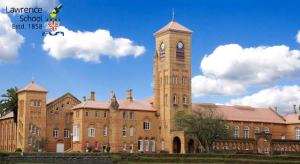
The Lawrence School, Lovedale ( Estd 1858)

Continue reading ““Glimpses of a Glorious Past” : An Informal History of The Lawrence School, Lovedale”

“India After Gandhi” by Ramachandra Guha

Although this book was published in 2007 by ECCO, an imprint of Harper Collins Publishers, I must confess rather sheepishly that I just read, “India After Gandhi” by Ramachandra Guha-in October 2016. The by line is an apt description of the book, “The History Of The World’s Largest Democracy.”

The hard bound edition ( which my friend Divakar Kaza said would improve my biceps before I was done with this tome) runs into 759 pages, followed by nearly 100 pages of well-researched notes.  The cover flap says, “massively researched and elegantly written, India After Gandhi is at once a magisterial account of India’s rebirth and the work of a scholar at the height of his powers.” I would agree. It certainly is extensively researched and most elegantly written though I would have said, “height of his prowess” speaking of the author’s talents rather than his “powers.”  Continue reading ““India After Gandhi” by Ramachandra Guha”