Exploring San Francisco in a Waymo Driverless Car

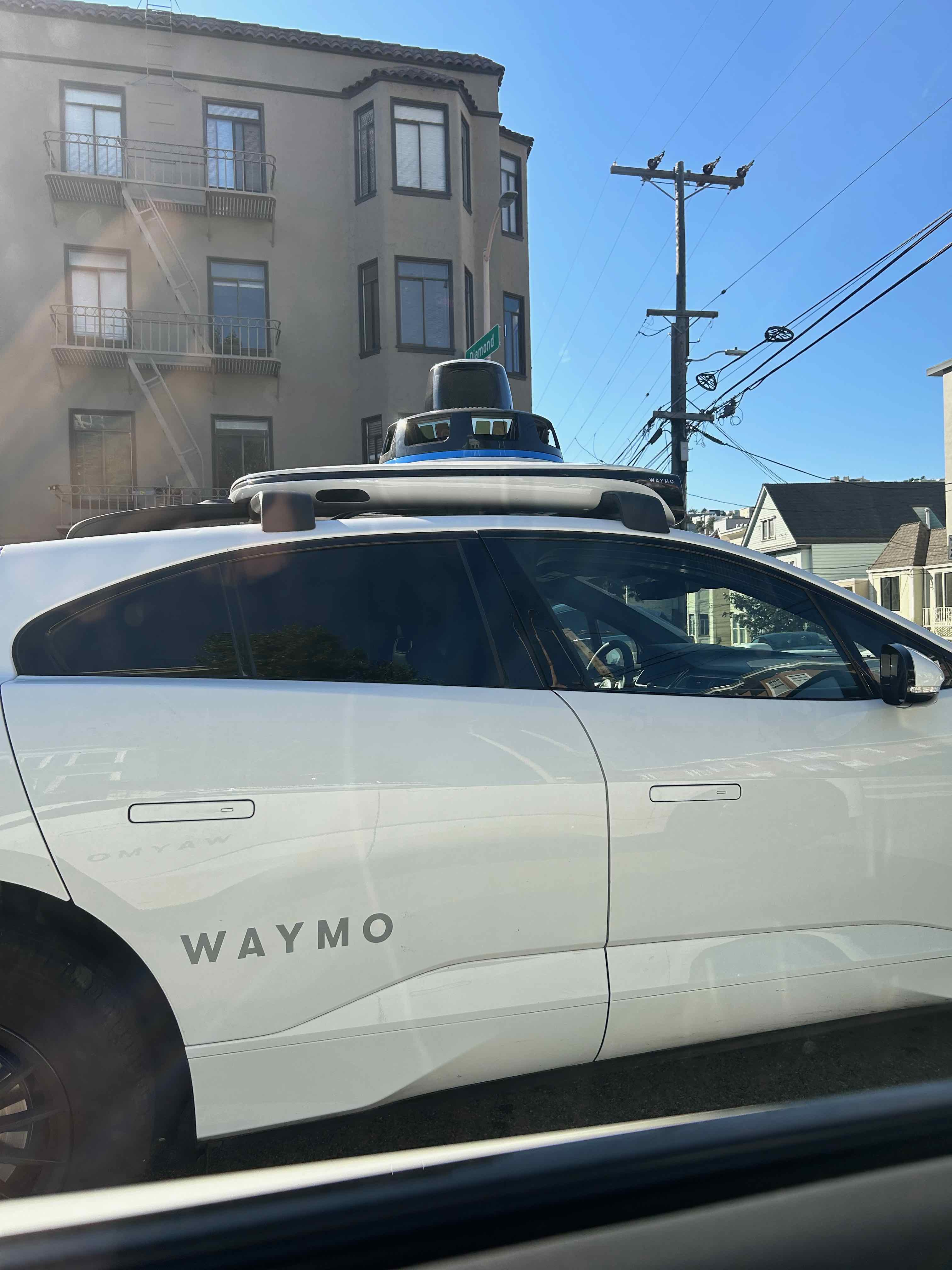
Perhaps in 2019, while walking in San Francisco’s Mission District, a white coloured car with some gizmo rotating on its roof caught my attention! I hadn’t seen anything like that before. I was told it was one of those experimental driver less cars! The stuff on the roof were sensors, cameras, and God knows what which enabled the car navigate busy city roads without a human being at the driving wheel!

Cut to October 2024. We were back in San Francisco and were eagerly waiting to take our first ride in a Waymo- a self-driving/driverless car service, which is become increasingly popular by the day. These cars are now called autonomous vehicles or robotaxis. It was very simple really. I downloaded the Waymo App, created an account and was ready to go!

Shobana and I decided to visit Cole Valley for old times sake. Using the App, we hailed a Waymo for a ride from the Luma Hotel where we were staying. The Waymo pulled up to exactly where we stood. The App had advised me to pull the door twice. Once to unlock the door and the second to open the door. As we settled ourselves comfortably in the spacious back seat of the all electric Jaguar IPACE, we couldn’t help marvelling that there was no one in the driver’s seat to take us to our destination! Our thoughts were interrupted by an announcement reminding us to fasten our seat belts! We did that- and we were off.

Our ride took about 24 minutes and covered 4.5 miles in San Francisco traffic. Never once did we feel nervous. Not even when our Waymo halted at the top of a steep slope when the lights changed to red. When the lights changed the wheel spun and we were off again taking a perfect turn.

There was light music playing in the background. We could have changed the music and chosen something else but we were much too busy enjoying the ride. To our delight at a traffic signal, we stopped and another Waymo pulled up beside us!! It was mind boggling for us to see our Waymo speed up when required, slow down when appropriate, stop where and when required- all without a driver!!

I have written about our personal experience of the ride. For those who want more in depth information of how it works, please do check out The Waymo Driver in their website.

Soon after, we reached our destination at exactly the time projected at the start of our drive! Congratulations to the folks at Waymo! This was a memorable experience for us. Our Waymo ride was way more comfortable and exciting than we expected!

Towards A Healthy Life

It was a little difficult to digest at first but I had to accept my friend was right. She pointed out that we were now in the eighth decade of our lives!! When you get to my age, you tend to be more philosophical about things around you. One thing is certain- your health is key to your overall success in life. I know of many cases of very wealthy people not being able to enjoy what they have earned. Not because they don’t want to spend, but because their health just does not allow them to live the life they would like to. Indeed, health is wealth!

Paying attention to health is not just for older people as was the popular opinion in my youth! If anything, it applies more to younger people than ever before. I was astonished to read that in Bengaluru doctors have found a 30 % increase in people in their 30s having bypass surgery!

Stress levels too are growing alarmingly as seen by that startling statistic in the previous paragraph! In my experience, reading has been a good habit to cultivate and pursue across all ages. Read from your device or from a physical book – but do read! I know that many young people don’t read as much as we used to at their age. “Where’s the time, uncle?” is a plaintive cry! The answer is simple. You have to make time for what you consider important. Check out this article by Jim Kwik. Investing just 30 minutes a day to reading- whatever you like- can do your health a world of good.

And for us older folk? Critical is the need to keep our brain engaged and active! Most of the points mentioned in this article from the Harvard Medical School on keeping your brain young appear to be just common sense! But as the old gag goes, common sense is sadly often uncommon!

Abraham Lincoln put it so well when he said, ” “In the end, it’s not the years in your life that count. It’s the life in your years.”

“The Teachings Of Shirelle” by Douglas Green

We are accustomed to being told to look around us and learn lessons from others- human beings, of course. But learning lessons from a dog? That too a stray from the pound that got the nickname, “Knucklehead”?? This is what “The Teachings of Shirelle: Life Lessons from a Divine Knucklehead” by Douglas Green is all about. First published in 2015 by Cavalleria Press, this book makes for delightful reading. It vividly captures that beautiful – and sometimes stressful- relationship between a dog and her owner.

Green writes with great feeling about the twelve years he and Shirelle -his dog – spent together. She became the centre of his life, particularly when she was diagnosed as having malignant tumours. The story of how he never gave up hope- enjoying every minute they spent together – knowing the end had to come, touches you so deeply. He says, “Shirelle lived with no apparent awareness of death but lived each moment, as always , to the fullest.” How true it is that we take time for granted, postpone or ignore things we should do for our loved ones, until we are bluntly told that the countdown has begun. The time ahead is limited. The tough part is that no one can say with certainty when the end would come. They could only say that it would be upon him- any day now!

The story begins with the author deciding to get a dog for himself. He visits a pound in Los Angeles, where he lives, to take home a stray. His family had always got strays from the pound and never cared for a dog’s pedigree. As he walks along the cages in the pound, something clicks within him when he sees a pup which he later discovers is part husky-part Saint Bernard. She is taken home and later christened ” Shirelle”.

Douglas Green is a psychotherapist, writer and stage director. He has started, ” AskShirelle” to keep alive her memory and help kids, teens and their parents. In his practice, he uses much of what he learnt from Shirelle- the knucklehead from the city pound who changed his life- and perhaps that of so many others!

“Hillbilly Elegy” by J D Vance

To be honest, I had never ever heard of J D Vance until recently. Only when Donald Trump chose him to be his running mate did I hear his name. The focus of many stories I read here in India were more about his wife Usha. That was because her parents were immigrants from India.

I then found his book, ” Hillbilly Elegy: A Memoir of a Family and Culture in Crisis” (Harper, 2016). You must remember he wrote this long before he became a Senator from Ohio. In 2016, no one would have imagined that Vance would become a candidate for Vice President of the United States! This happened only in July 2024. We should keep this in mind as we read Vance’s book.

This is Vance’s personal account of what it was like to have a deeply troubled family life. I admired his honesty in sketching out the principal characters in his life. These include his drug -addicted much-married mother; his sister, who was his biggest support; and his maternal grandparents. They influenced him deeply as he grew up. Indeed, it was his grandmother who played a huge role in shaping his thinking . She helped him escape out of the poverty- stricken, addiction- oriented life he would otherwise have led.

Many people, especially those outside the US, believe that all white people in the US are very well off. Vance’s book describes the difficulties faced by most poor white families in small towns and mining communities. These were compounded when blue collared jobs became scarce. Manufacturing and mining took a steep dive in profitability. Unemployment grew in leaps and bounds. This phenomenon made large parts of the northeast of the United States being called the Rust Belt. As a consequence of economic downfall, social and family ties were adversely affected. The number of broken marriages, broken homes and domestic turbulence increased substantially. Vance lived through all this as a kid. It was naturally his ambition to break out of the chains of poverty.

Vance explains how his four year spell in the US Marine Corps was a turning point in his life. He then attended Ohio State University -not surprisingly the first from his family to do so. He worked hard to achieve his dream of getting admitted into and graduating from the prestigious Yale Law School.

And no, though his wife Usha is mentioned in the book, not much is written about her. Of course, Vance describes how much she helped him at Yale Law School. That apart readers in India looking for stories about her family would be disappointed. I don’t think he even mentioned that her parents migrated from India!

The book underlines how adversity is a tough teacher. You learn a lot when you are dealt with many knocks in your life. Especially when you face many hardships- financial and emotional- at an early and impressionable age.

Jetpack Beta: Write Brief With AI – Free Tool for WordPress Users

Here’s something which bloggers on WordPress will love. The folks at Jetpack have a beta version of “Write Brief With AI.” which looks incredibly interesting!

Apparently they started this project with the internal monicker of “Breve” which means “brief” in Latin. During the beta stage, this is available for free for all WordPress. com users.

Indeed it is built into the WordPress editor, so there is nothing extra one has to do. All you need to do is to click on the Jetpack logo. You will find this on the top right of your screen.

Just what does this tool do to help you write better?

  1. To start with, it measures readability. As you write, it measures your readability score. As I key in this my score is 4.39. But hey! Is that good? Is that bad? I am confused. The accompanying article says’ ” Our research shows you should aim for a score of 8-12 for the highest readability. (The lower the number, the better.) The tool calculates your score as you type.”

If lower the number is better, then why specify 8-12? Not clear at all, to me! Is 6 better than 8? Then why 8-12?? Hope the folks dealing with this can clarify.

2. It helps you find and reduce Long Winded Sentences. This is a good feature. I tried it out and it works. The best part is that it offers suggestions for improvement too.

3. It identifies weak words like, ” possibly”, “might” and “could” which it called unconfident words. You should aim at minimising the use of such words to make your writing more confident and direct.

4. It simplifies your vocabulary, helping you choose simpler words to replace bombastic and complex words.

It helps you improve the title of your blog post and offers suggestions too!

Last but not the least it gives you an AI generated featured image for your post. Like this!!

Overall, I found this interesting!

There is a big debate brewing on AI and writing. A school of thought- supported by the Author’s Guild– says AI generated technologies are a threat to authors. The blatant copying of original work- without any attribution whatsoever is wrong, in my view. Yet, tools like Write Brief with AI do bring value to someone aiming to improve his/her writing style.

What do you folks think?

“Exit Wounds” by Lanny Hunter

Growing up in India in the 1960s and 1970s, for me the Vietnam War was far away. It was distant from our every day lives. Yet it did loom large over the decades and occupied a lot of mind space. To my mind, there were two types of people in those days. A large number of Americans seemed to believe they were true patriots. They believed they were fighting for their country’s values and objectives of defending democracies anywhere in the world. As the war dragged on and the number of dead and wounded increased by the day. A powerful anti war sentiment grew in the US. Books have been written in plenty exhorting both sides of this spectrum. I have read many of them over the decades.

A recent book, published in October 2023 by Blackstone caught my attention. It is titled ” Exit Wounds: A Vietnam Elegy” and is by R Lanny Hunter. Serving with the Special Forces in Vietnam, Dr Hunter is well placed to write about the horrors of war. He saw this for himself as a medical doctor on the battlefield. He distinctly remembers the six-day siege at Plei Me in October 1965. Here, the US Forces directly encountered the Army of North Vietnam for the first time. Dr Hunter then a Captain (Medical Corps) in the Special Forces has described this battle in gory detail. He writes about the men – whom he came to know intimately-who fought that battle. Hunter had to make quick decisions on the battlefield. These decisions saved the lives of many soldiers. Sadly, all were not saved as he worked on the age old principle of triage.

Dr Hunter returned to the United States after his two year tour of duty. He was one of the most decorated medical officers to serve in Vietnam. Amongst other awards, he was awarded the Distinguished Service Cross

Given the financial resources and military might of the United States, no one imagined at that time, that this war that would end the way it did. Over time, the North Vietnam Army occupied large tracts of South Vietnam. One picture remains framed to this day in our minds. It is of men desperately scrambling to hang on to the last helicopter to leave the US Embassy in Saigon. The United States exited Vietnam in 1973 when Richard Nixon was the President – after losing over 58,000 men. The long drawn war finally ended in 1975 with a comprehensive victory for North Viet Nam.

Hunter writes that during the Vietnam war – 1965 to 1975- the United States and its allies dropped more than 7.5 million tonnes of bombs in Vietnam, Laos and Cambodia. This was more than double the amount of bombs dropped in Europe and Asia in the Second World War! Still they lost the War – which has many insights to students of modern day warfare and geopolitics.

What sets Hunter’s book apart from most others is not just the description of his meritorious war time duties. It is the story of his return to Vietnam in 1997. He returned -three decades after he left Vietnam -answering a plea for help from Y-Kre Mlo. This was his former Montagnard interpreter of bygone days. All through the book, we see the war through Hunter’s eyes as also through those of Y-Kre. We see how he was treated both during and after the war. As is obvious, he was made to suffer a lot after the war for having helped the Americans.

There are some charming vignettes in the book. One is of Hunter taking time off his battlefield duties to answer letters from a kid back in the US. His observations of Vietnam in the ’90s are also interesting. He notices how some things had changed but many others had remained pretty much the same.

I am sure this book will interest readers keen on war and human interest stories. Highly recommended.

Farewell, dear Moira!

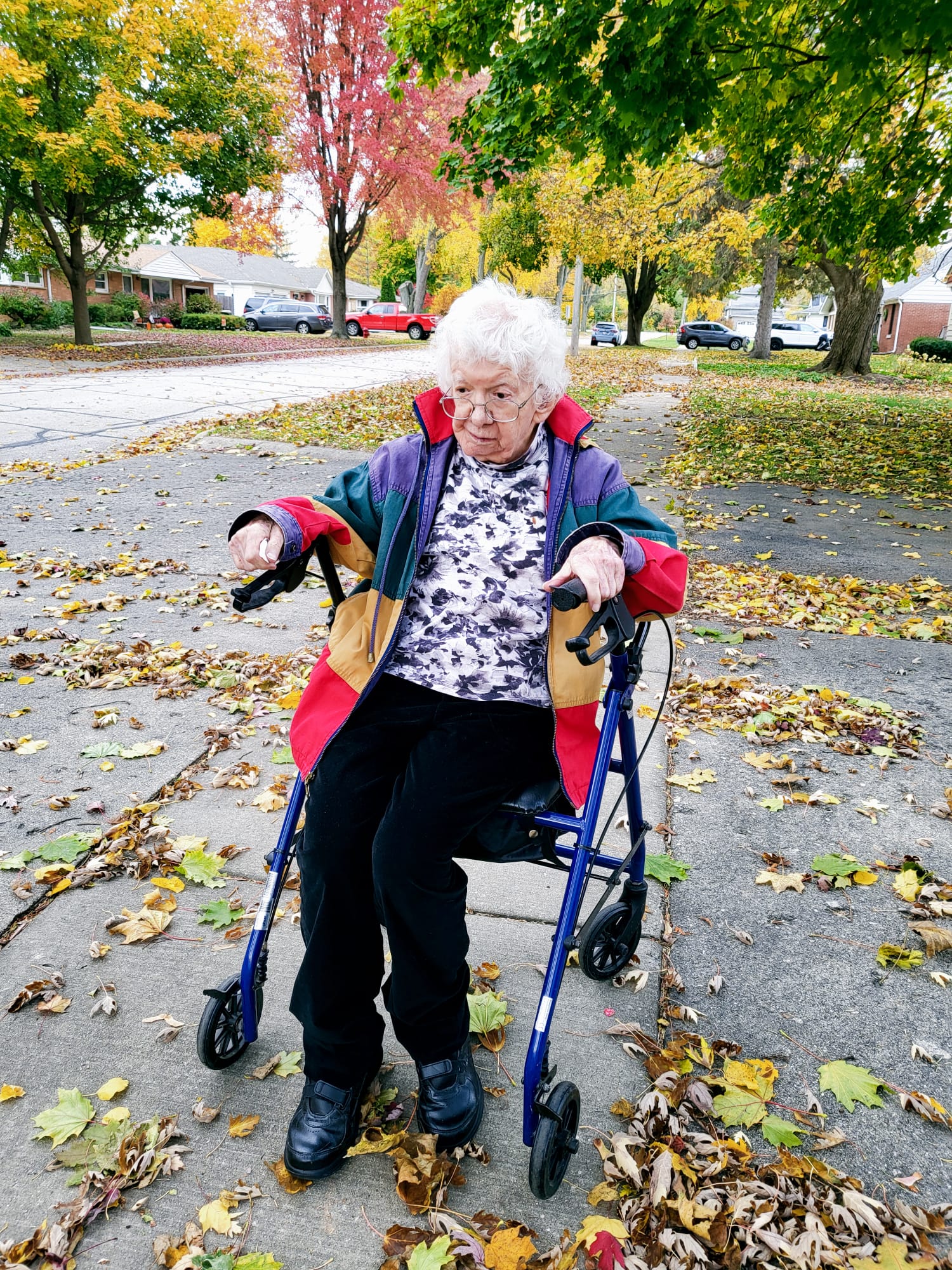
A little after a month past her 100th birthday, Old Lawrencian (OL) Dr Moira Breen Ph.D passed away on January 26, 2024 at Libertyville, Illinois, a short distance away from the hustle and bustle of Chicago and very far away from Madras (present day Chennai), India, where she was born on December 18, 1923.

I offer this tribute to dear Moira on behalf of Old Lawrencians  from Lovedale cutting across many generations from all over the world. At the time of her passing, she was most likely the oldest living OL in the world! 

Moira, I understand, is a girl’s name of Greek and Irish origin. In Greek, it translates to “destiny,” “share,” or “fate”. It is said that when babies were named “Moira ” they were encouraged to believe that their future was in their own hands.  Dr Breen, in that sense, was most appropriately named. She was a totally self made person . Her many accomplishments are all the more remarkable considering her humble beginnings. She was dogged by many difficulties starting with her father abandoning his family when his children were quite young. 

In the 1930s, the pupils of the Lawrence Memorial Royal Military School , Lovedale , were not quite associated with higher studies. Many of them joined the  military service in the UK or took up Govt service in India in the Railways, Customs and other Government departments. In this milieu, Dr Moira Breen’s academic and scholarly research reflected in many published papers stand out in testimony to her hard work, diligence and ability to overcome challenges that came her way.  “My old school in India gave me the backbone to live up to its motto “Never Give In” she wrote, summing up her life succinctly.

Family circumstances sent Moira and her younger brother to Lovedale in February 1932. Lovedale was home for her for most of the year, till she completed her Senior Cambridge examination with a first class. She then went to Queen Mary’s College in Madras ( present day Chennai) to complete her Bachelor of Science degree- once again in the first class.  Five years in the Christian Medical College , Vellore and the Women’s Christian College, Chennai as a teaching laboratory assistant fuelled in her the passion to study more. Appreciating her mettle, her Professors recommended her for a Master’s program where she could study and do research at Vassar, Poughkeepsie N.Y. It was only the second institution to grant degrees to women in higher education in the United States. 

As a 25 year old Anglo -Indian lady, who had never set foot outside the Madras Presidency before, she travelled from Ceylon ( now Sri Lanka) in a Dutch freighter heading to the United States. After a successful stint at Vassar, she did her  doctorate in Biochemistry from Northwestern University Medical School, Chicago, Illinois in 1960. Subsequently, she became a Senior Medical Research Scientist with The Federal Government of the USA  in which capacity she worked till she retired in 1988.  

She loved art and even at a fairly advanced age showed a proficiency that belied her years. Apparently, she also drove a car till into her 90s!  She was known to be genial, helpful and a respected member of whichever community she lived in. She loved dogs and took in many over the years, her favourite being a Sheltie . 

Sadly ,from childhood, Moira was afflicted with a facial deformity which she took in her stride with her customary courage. She wrote, ” I am glad you liked the photo of myself.  I owe a lot to my 3 “facial and reconstructive surgeons” – one in India and two in the US – who over the years have performed a total of 22 surgical procedures on my face making me more socially presentable.”

Some of us Old Lawrencians like Joseph Thomas, (ARA 1957)- (who first introduced me to Moira), Yohaan John (VIN 1991) and I, Prem Rao ( NIL 1967) corresponded with Moira and spoke to her once in a while but we never actually met her. I still remember her kindness in readily sharing her memories for  ” “Glimpses Of A Glorious Past: An Informal History of The Lawrence School, Lovedale” that I edited some years ago. (For those of you who are interested, there are several posts on this project in this blog. )

Remember, we spoke of destiny earlier? Here’s how Dr Breen happened to meet Rahel Abraham (DEO 1994). Moira wrote, ” It was a lovely Fall day, sunny and cool and Rahel was sitting outside a bakery shop with her two children and a big black Labrador dog.  I noticed the dog and stopped to talk  to her on my way in to the bakery store.  When I came out with a big grocery bag filled with 3 coffee cakes ( I was taking them to a party) she very kindly offered to help me.  My car was packed in the parking lot in the next block. So Rahel, her two young girls and the black dog accompanied me to my car.  On the way we introduced ourselves and she told me she was from Kerala. The following Sunday she visited me with her two girls and her black dog. The following week she invited me for dinner at her house where I met her husband and other members of her family. 

She was delighted to have met another OL who left Lovedale 55 years after she did! To add one more co-incidence to the story, it turned out that Moira knew one of Rahel’s relatives Dr Liza Chacko at CMC Vellore from many decades ago!! 

Starting from where she did and going through so much in her long life, for me, Dr Moira Breen was “Never Give In” personified.  Her life reminds me of the old saying, ” Count your age by friends, not years. Count your life by smiles, not tears!” May her soul rest in peace! 

I cannot end without thanking Joe, Yohaan, and Rahel for kindly sharing material and pictures for this post. 

“Resurgence- A Hyderabadi Miracle” by Ravi Krishnaswamy

If one wants an overview of interesting and impactful happenings from different parts of the world for four decades from 1975 to 2020, one should read, ” Resurgence- A Hyderabadi Miracle” by Ravi Krishnaswamy (aka K Ravi).   In this book, published by Enas Publications in 2023 , he covers in considerable detail happenings during this period across various subjects like politics, sports, technology, and movies.

Seeing the litany of books, movies , songs etc described one might well ask: what is so much of information – almost Wikipeadic (to coin a phrase) in scope- doing in a work of fiction? The answer is that the author has used his imagination to good effect to create this story. In this fictional work, the main protagonist is Ram from Hyderabad, now in Telangana State in the South of India. He lives with his parents and siblings in Marredpally an area in Secunderabad which is like a twin city to the larger city of Hyderabad. Ram has a twin brother – who, not surprisingly at all, is called Shyam, like in the famous Hindi movie of that name. Sushila is their elder sister. As a young boy, Ram was an avid and even precocious reader but sadly he met with a bad accident in 1975 when he was hit by a speeding car while cycling with his friends.

Ram falls into a coma -which in this work of fiction eclipses even the record of Elaine Esposito of being in a coma for 37 years- and continues to be in that state till he miraculously recovers 45 years later. It is 2020 by then and the world is in a grip of a new and strange phenomenon which became known as Covid 19. This brought in dramatic changes all over the world. The lockdown in India for a few months helped Ram- in this story- to catch up with events of the decades that had passed him by as he lay in a coma. His parents have passed away so it is up to his sister, brother, and brother-in-law to bring Ram up to speed ( to use a modern idiom) on what has become a fascinating and new world for him. Even physical structures like some of the old landmarks of his locality have been wiped out.

The story weaves in a commentary of present day life where there have been so many advances in technology. These have resulted in developments which would have been considered impossible decades ago. But as with everything else, people too have changed. Ram notices a higher degree of greed for material successes, a hunger for consumption (and probably over consumption), and many other dramatic behavioural changes which reflect a world that would have been considered alien in the 1970s.

I was not at all surprised to hear from Ravi that he wrote this book during the Covid days. This book is very different from his first book called, “Born Smiling: A Father’s Tribute” which was more personal in nature, dealing as it did with the life and passing away of his beloved daughter.

This book is quite different in scope and character from most others. I compliment the author for choosing a difficult approach to tell a story which he assures us is not his- but set in areas very close to his heart.

“Hindus In Hindu Rashtra” by Anand Ranganathan

While it is customary to start with the beginning of the book, let me start my review instead from the end! The book I write about was released on August 15, 2023 and is titled, “Hindus In Hindu Rashtra” by Dr Anand Ranganathan (BluOne Ink, 2023). If you think this book is about how Hindus dominate the narrative and events in our country, primarily because of their numbers, you must see the fuller title of the book, which says, ” Hindus In Hindu Rashtra: Eighth -Class Citizens And Victims of State-Sanctioned Apartheid” !

Dr Vikram Sampath, Historian and Fellow of the Royal Historical Society, sums up the situation described by the author by succinctly writing, in his Afterword to the book, ” If, even after reading a scholarly and evocative work like this- a small masterpiece in its own right- the Hindus and the Governments of this country do not wake up to take control and address these issues, the fate of the community will sadly be akin to that of lambs being quietly led to their own slaughter.”

Let’s place this book in context of some important numbers as regards population. Since this book will be of interest to people all over the world, I wish the author had added some key statistics in the Prologue.

India’s population is presently 1.43 billion which adds to the complexities of governing a large and diverse country. Yes, Hindus do form the majority of India’s population – at least as of now. According to Pew Research, between 1951 and 2011, the percentage of Hindu’s in India’s population fell from 84 % to 79% while the population of Muslims grew from 9.8 to 14.2 %. Currently their number is in excess of 204,000,000, which is larger than countries like Russia, UK, Germany, and France. It is estimated by Pew Research that 94 % of Hindus in the world live in india. However, in terms of certain rights, as you will see from Dr Ranganathan’s crisply explained, fact based book, they are far worse off than are the ” minorities” in relation to important aspects of life such as religion, and education, amongst others.

We are nearly two and a half decades into the 21 century and with the power of technology and social media it is clear that the one who sets the “narrative” (to use today’s speak) is the winner. Or at least has the major advantage to start with. We see these days how outrageous allegations and “news items” (mostly exaggerated or even blatantly false) grab all the headlines. If this is challenged, a toned down version or even an apology is rendered- not as a headline but in some obscure corner of the newspaper which no one notices! By then the damage has been done!

Many critics of Prime Minister Modi’s Government like Congress Leader Rahul Gandhi for example, or journalist Rana Ayyub for example, say that Muslims feel attacked in India and/or there is a move to inflame hatred against them. Presenting a very different picture of what is actually going on, Dr Ranganathan explains in his book, how on the contrary for decades after Independence in 1947, the Hindus are being discriminated against. He has eight chapters in his book and each of them deal with one aspect of this discrimination such as State Control of Hindu Temples, The Waqf Act, and so on. This is the reason why he calls Hindus “eighth -class citizens” of India!

It is a must read for every Hindu in India- to make them aware of where they actually stand despite all the noise that suggests a “Fascist Hindu Rashtra.”

It’s unfortunate these days that terms are used so casually. Often people speak of “genocide against minorities in India” but the last genocides in India were against the Kashmiri Pandits in the 1990s (which is covered in this book ) and before that, against the Sikhs in 1984.

I found the book to be meticulously researched and informative. I hope this will be translated into many Indian languages so as to increase its reach.

Nostalgia: About XLRI

The other day I was going through some old photographs and came across one that instantly brought back a lot of nostalgia for me. It was a picture of the Enright Hall, our hostel at XLRI, Jamshedpur, when I studied there from 1972 to 1974.

This residence for the male students at the Institute was named after Fr Quinn Enright SJ, the first Director of XLRI. The ground floor had some faculty offices, a large dining hall which was our Mess ( and often it was in a big mess), a much frequented music room and a canteen-store of sorts. The rooms for the students were in the floors above.

In those days, the girl students were not staying on campus. They lived elsewhere in a rented house, to which they repaired every evening after spending the whole day at the institute. It was considered rather unsafe for them to go back so late alone so they were always escorted by a band of faithful male admirers. They, naturally, came to be known as Escorts Limited after a well known company of those times.

So many memories flood my mind! Of the terrace -where we took refuge in the extremely hot summer months , lugging our mattresses up to bed down under the stars. Of the lawns on the ground floor, scene of many an impromptu Lawn Crowers Meet where guys and girls gave vent to their musical and singing talents. And,, of course of the rooms in between! It was a pretty modern building for those days with US style water faucets for drinking water, elevators and so on.

The XLRI campus had in those days a basketball court, a tennis court and a large ground for cricket, hockey and the like. The Main Building housed housed the offices, classrooms, library, and a small auditorium. While one could pretty much wear what they fancied in the hostel area, there was a rule that shorts were not allowed in the main building. One of our basketball players thirsty after a game headed straight for the nearest water faucet- in the main building disregarding his shorts. As he was quenching his thirst, a hand on his shoulder told him he was about to be pulled up. That hand belonged to the legendary Fr Edward McGrath who told him- as only he could, ” Son, this is Xavier Institute- not Miami Beach!”

At one time some girls lived in rented accommodation at one end of the cricket ground. During cricket matches it was therefore common for the commentator to announce, ” Here comes XYZ bowling from the Kastuar Sisters End”. The other end was the “Co-operative College End.”

The last memory for now is of a dear friend,Dilip Bam, now sadly no more. No party in the Mess was complete without Bam doing his famous dance on the dining table balancing a jug of beer on his head.

Those were fun times! As Mary Hopkin sang in one of the most popular songs of those faraway times, ” Those Were The Days My Friend! We Thought They Would Never End……”